
For teachers and students of Lifeway’s Explore the Bible lesson of Romans 12 for Nov. 8, 2026. Includes a suggested introduction to the lesson, text outline and highlights, illustrations to share, discussion questions for your group, and spiritual life applications. A video version of this overview is available on YouTube at:
INTRODUCTION:
Mike and Lu Moore were camping near Mt. Saint Helens on May 18, 1980 with their two preschool daughters, when the volcano erupted. Amazingly they were able to escape the scene, as winds and deadly volcanic ash blew around them. Steve Olsen tells in his book, Eruption: “Three months later, Mike and Lu came back to the Green River. Partly they wanted to look for Mike’s $800 Zeiss binoculars, which the found in the ash just where Mike had dropped them. Then they stood and beheld the old-growth forest in which they had camped. As Lu later recalled, it was as if the forest were saying to them, “You’ve been saved. Now do something about it.” (p. 168)
This should be the attitude that we as Christians should have, shouldn’t it? We’ve been saved — now let’s do something about it!
???DISCUSSION QUESTION???
“What are some things we should ‘do about it’ since we have become Christians?” How should we respond to our salvation?
(You/your group can think of many: thank God, worship Him; witness, give to spread His word, and so on.)
In today’s passage in Romans 12, the Apostle Paul is inspired by the Holy Spirit to point out some of the things we should do, because the Lord has saved us.
CONTEXT:
As we have mentioned week after week recently, the Book of Romans gives the most detailed explanation of the gospel of salvation by grace through faith in Christ, found anywhere in the word of God. We’ve seen how all have sinned, Jew and Gentile alike, and are accountable to God. But despite our sin, and while we were still His enemies, God loved us and sent Christ to die on the cross for our sins. As a result, whoever, Jew or Gentile, puts their faith in Jesus is saved by God’s grace. We’ve seen all this in detail over the past couple of months.
But now as we come to Romans 12, the tone and content of the book changes, with the use of this word: “Therefore.” For the rest of the book now we are taught how we should respond to the salvation that was presented to us in Romans 1-11:
OUTLINE:
I. Give Your Life as a Sacrifice (:1-2)
II. Use Your Spiritual Gift (:3-8)
III. Live Out the Christian Life (:9-13)
TEXT: Romans 12:1-13
I. Give Your Life as a Sacrifice (:1-2)
:1 “Therefore I urge you, brethren, by the mercies of God, to present your bodies a living and holy sacrifice, acceptable to God, which is your spiritual service of worship. 2 And do not be conformed to this world, but be transformed by the renewing of your mind, so that you may prove what the will of God is, that which is good and acceptable and perfect.” (NASB 1995)
These are some of the most famous words in the New Testament. Many of us have them memorized (and should!) And the reason is, they are so apt and appropriate for us as Christians.
“Therefore” is that first word — it’s not actually the first word in Greek but it still makes the point — “Therefore” refers back to the salvation we have been talking about for the last 11 chapters — the most in-depth discussion of the gospel found anywhere in scripture (and which he had praised God for in the last verses of Romans 11). God had mercy on sinners, whoever would believe in Jesus. SO NOW WHAT? How should we live? What should we do as a result of this great salvation? We are not to be same! Our lives are to be changed. Just like Mike & Lu Moore were not going to be the same after that life-changing experience on Mount St. Helens, so we as Christians are not going to be the same after we are saved by God’s grace through faith in Christ. “Therefore”: things are going to change; things are going to be different, because of what Paul calls “the mercies of God” for us in Christ.
So what should be different? The Lord shows us in the rest of :1-2 (and really throughout the rest of the Book of Romans. The first 11 chapters were more “theological,” explaining salvation by grace through faith, and now the second half is primarily about how we shall live as a result).
In 1976, Christian theologian Francis Shaeffer wrote “How Should We Then Live?” a book and video series about how what we believe (our worldview) impacts the way we live. In a very real sense, that is what Romans 12 is showing us here: “How Should We Then Live?” What does it tell us?
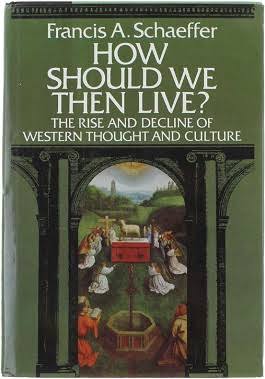
First, he says: “present your bodies a living and holy sacrifice.”
Many of us have heard this so many times that it may just go right by us, but think about what he’s saying here: in the Old Testament (and in many other cultures as well) when you want to make a sacrifice to God, you take an animal and you slay it and burn it on the altar of sacrifice. In the Old Testament there were “thank offerings” you could voluntarily offer to God when you were grateful for something. You would offer portions of an animal from the flock or herd as a way of saying “Thank you!” to God.
But here, Romans 12 says, our “offering” to to God is not a cow or a sheep, but “your bodies” — ourselves!
ILLUSTRATION:
When I was pastoring my first church in Oklahoma City, we passed the offering plates as most churches used to do — and the next day the church secretary showed me a note that someone had put in the plate. It said: “I give myself.” I’ve read where others have done that same thing. And truly, any offering we give to God should begin with ourself.
What should our response to our salvation be? We should give ourselves to God: our whole bodies, everything we are, as a living sacrifice for Him. Notice:
— It is a “living” sacrifice.” God doesn’t ask us to go and kill ourselves on an altar for Him. He asks us to go and LIVE for Him!
ILLUSTRATION:
It reminds me of what Abraham Lincoln said of the men who died at Gettysburg, the most strategic battle of the Civil War:
“We are met on a great battlefield of that war. We are met to dedicate a portion of it as the final resting place of those who have given their lives that that nation may live. It is altogether fitting and proper that we should do this. But in a larger sense, we cannot dedicate, we cannot consecrate, we cannot hallow, this ground. The brave men, living and dead, who struggled here, have consecrated it, far above our power to add or to detract. …
It is for us, the living, rather, to be dedicated, here, to the unfinished work that they have thus far nobly carried on. It is rather for us to be here dedicated to the great task remaining before us …”
Lincoln was saying, because of the great sacrifice of those men, we need to “dedicate ourselves to the great task” before us. That’s what we as Christians should do. Because of the incomparable sacrifice Jesus made for us, we should dedicate ourselves to Him, and to the work He has given us.
Think about it: nothing less than our whole lives given to Christ should do, in light of what He did for us. “While we were yet sinners, Christ died for us.” What is our fitting response to that?
— Coming to church an hour a week is not a fitting response to what Jesus did for us.
— Giving 10% of everything He has given us is not a sufficient response to what God did for us in Christ.
— Volunteering an hour or two a week is not commensurate gratitude for our salvation.
And yet many of us “feel really good” about “doing these things for God.”
Jesus gave His life, suffering the whole wrath of God on the cross for our hell, in our place, on the cross, to give us forgiveness and salvation and glory with God forever and ever as a gift. THERE IS NO GIFT WE CAN GIVE HIM THAT IS ENOUGH. It’s like the great hymn says:
“Were the whole realm of nature mine, that were a present far too small. Love so amazing, so divine, demands my soul, my life, my all!”
The end of :1 says that this kind of sacrifice, of our whole selves to God, is an appropriate and “acceptable” sacrifice to God. The Greek word for “acceptable” is “logikos,” which means “logical.” It just makes sense for us to make this kind of sacrifice to God, in light of what He did for us. It is an appropriate way for us to respond to His salvation.
So what does it mean, in a practical way, to “be a living sacrifice” to God? That sounds good but what does it really involve?
Verse 2 explains just what that involves: “And do not be conformed to this world, but be transformed by the renewing of your mind” This tells us that to be a living sacrifice to God means:
— We are “not to be conformed to this world.” The word “conformed” here comes from two Greek words: “sun” (“with”) and “schema” (“appearance”). It means to take the form or appearance of something else: to follow a pattern or mold. Some have translated it: “don’t be poured into the ‘mold’ of this world” — and I think that’s a good translation/application.
???DISCUSSION QUESTION???
“What are some ways that God’s people can get ‘poured into the mold’ of this world’s ways?”
(— ILLUSTRATION: I’m reading a book by Philip Johnson: Reason in the Balance. He talks about how Materialistic Naturalism is the “default” way of thinking in government, science, and education in the U.S. today: that the earth and everything in it came into being by godless, natural causes, and that material things are all that matter. This mindset is “the air we breathe” in our society and most of its institutions today. If we aren’t careful as Christians, we will fall into that “mold.”
— As a result, most people make money, or worldly success, or popularity, or temporal pleasure, our most important goals. Again, if we aren’t careful, we’ll live the exact same way as Christians.
— It’s easy for churches to get “poured into the mold” of this world and follow the business practices of the world instead of the Biblical patterns of God’s word.
And on and on. The temptations to be “conformed to the mold of this world are endless)
Romans 12 says as God’s people, we are NOT to be conformed to the “mold” of this world, but rather:
— But because we have been saved by Christ, we are to be “transformed.” This is the Greek word “metamorpho-o” — of course we get our word “metamorphosis’ from it. “Meta” means “after,” “morpho” means “to shape or form.” Most of us have heard the popular term “He morphed into” this or that. (For example: in the kids’ show “Power Ranger” the ordinary looking young people “morph” into the Power Rangers with special powers.)
So it means to change, to be different. Christians are not to be conformed to the “mold” of this world, but we are to be different. This is something that many of us need to hear. For a generation or so, it seems that the “strategy” of many Christians and churches has been to try to reach the world by being as much like the world as we can be: in music, appearance, activities, and so on. But all that’s happened as a result is that the church and many Christians have become like the world. But Romans 12 says this is absolutely the wrong strategy: CHRISTIANS ARE NOT TO BE CONFORMED TO THE “MOLD” OF THIS WORLD; WE ARE TO BE TRANSFORMED, made different, by our commitment to Christ.
And how is this to happen? The second part of :2 says “by the renewing of your mind.” We’ve been brought up in this devilish, sin-tainted world, and “the air we breathe” is the “materialistic naturalism” that Philip Johnson wrote about. Our “natural course” is to follow the way of the world. For us to change that, we have to purposefully “renew” our mind — and the way we do that is with the word of God:
— Psalm 1 famously says the righteous man does not walk/stand/sit in the way of the wicked, “but his delight is in the Law of the Lord, and in His Law he meditates day and night.” HOW does the righteous man keep from being conformed to the world? By delighting and meditating in God’s word. To “meditate” in scripture means to memorize it, and think about it. The Hebrew word means “to murmur” — it’s the picture of someone moving their lips and half-whispering a verse they are quoting to themselves.
— I Peter 2:2 “Like newborn babes, long for the pure milk of the word, that by it you may grow in respect to salvation.”
— II Corinthians 10:5, “taking every thought captive to the obedience of Christ.”
So Christians can avoid falling into the “mold” of this world, by renewing our minds in the word of God: read it daily, study it, memorize it, meditate on it, let it change your way of thinking.
Honestly, most Christians need much more time in God’s word than we are currently getting. Think of the hours of exposure to worldly thinking we get all week: from television, the internet, worldly radio and music, advertising, lost people all around us. And many of us get an hour or two at church, and we are “really good Christians,” maybe we do a 20-minute “daily Bible reading.” No wonder so many of us are “conformed to this world”! We need more time in God’s word: reading, studying, memorizing, meditating, singing, hearing preaching and teaching, fellowshipping with other Christians who have a godly mindset — in order to really “renew” our minds.
This is why so many of us are not “proving what the will of God is” like the end of :2 says. We’re so much like the world; we’ve allowed ourselves to be “poured into its mold.” If we’re serious about our salvation — as we should be — we should be ready to lay our life on the altar to God. And that involves some very specific things: cutting back on the worldly input to my thinking, and purposefully getting more of God’s word into my mind in every conceivable way, so that I can renew my mind, which will help me to live the kind of Christian life I should, in response to what Jesus did for me.
II. Use Your Spiritual Gift (:3-8)
:3 For through the grace given to me I say to everyone among you not to think more highly of himself than he ought to think; but to think so as to have sound judgment, as God has allotted to each a measure of faith. 4 For just as we have many members in one body and all the members do not have the same function, 5 so we, who are many, are one body in Christ, and individually members one of another. 6 Since we have gifts that differ according to the grace given to us, each of us is to exercise them accordingly: if prophecy, according to the proportion of his faith; 7 if service, in his serving; or he who teaches, in his teaching; 8 or he who exhorts, in his exhortation; he who gives, with liberality; he who leads, with diligence; he who shows mercy, with cheerfulness.
So continuing with that thought of, how should I respond to my salvation in Christ, Paul now talks about the spiritual gifts God gives to His people. I Corinthians 12 addresses spiritual gifts, and :7 says: “But to each one is given the manifestation of the Spirit for the common good.” This teaches us that every believer who has the Holy Spirit in them through faith in Christ (Eph. 1:13), has a spiritual gift, that God gave him to use to serve Him/His church.
In light of that, it’s instructive that Paul opens this section saying in :3 that we are not to think more highly of ourselves than we ought to think.
??? DISCUSSION/APPLICATION QUESTION???
“WHY do you think he would start off this section on spiritual gifts with that warning, not to think more highly of ourselves than we should?”
(— For one, spiritual gifts are GIFTS: they are given to us by God. So we shouldn’t “think more highly of ourselves than we ought,” if we have some ability, as though we had earned it. NO! God GAVE that to us! We should be very humble about it.
— Secondly, :4-5 may give us some more insight on this, as it talks about how there are many members in the body, and we each have different functions. So we shouldn’t be proud, and think everyone should be like us, doing just what we are doing. Again, NO! God has given all these different gifts to His body — because churches need a lot of different things done. So don’t be arrogant, and act as though everyone should do what you are doing. Recognize that God has given us differing gifts, to be used in different ministries, and we should each be content to use whatever gift God has given us.
So :6 says “we have gifts that differ” — so let’s be humble about them! BUT THEN notice one really important thing it adds:
“each of us is to EXERCISE them accordingly.” The important thing about your spiritual gift is: USE IT! God didn’t give you a gift so you could know what it is, or be proud of it, or compare it with others, etc. He gave it to you to USE IT to serve Him and others in His church!
ILLUSTRATION
President Harry Truman gave a graduation speech at William Jewell College in 1946 and he told the graduates:
“We have a society which is organized, and if one cog in the organization gives out the whole structure begins to shake loose. Now let me urge upon you. Get in line, get on the team, do a little work; help make the United States what it must be from now on: the leader of the world in peace, as it was the leader of the world in war. I urge you to be good workers in the ranks.”
(David McCullough, Truman, p. 496)
We need to do the same as God’s people. None of us should be mere “spectators” in the church. We all need to, as Truman said, get on the team and do a little work! You don’t have to do the same thing someone else is doing — God gave us each different gifts! But we should each be DOING SOMETHING to serve God, with the gifts He gave us, to further His kingdom work in His church.
??? DISCUSSION/APPLICATION QUESTION???
“Who is someone in our church in whom I recognize one of the gifts Paul mention here in :6-8?”
You might post the list of the 7 gifts Paul mentions here, and ask your class to look at it and share examples of people in our church who have one of these gifts.
(For example, there is a guy in our church right now, whom I do not recall ever seeing him “on the platform” saying or doing anything on stage at all. But I have seen him on the security detail; and I’ve seen him bring loads of food in for a church fellowship, and set it up, and clean up afterwards. I thought: this guy has the gift of service!
You/your class can think of some like this. Another good question might be: “What are some spiritual gifts you see in people in OUR CLASS?” (You might have some of these ready to share/to “prime the pump.”) Let’s encourage each other regarding the gifts God has given each of us to serve Him and His church.
III. Live Out the Christian Life (:9-13)
:9 “Let love be without hypocrisy. Abhor what is evil; cling to what is good. 10 Be devoted to one another in brotherly love; give preference to one another in honor; 11 not lagging behind in diligence, fervent in spirit, serving the Lord; 12 rejoicing in hope, persevering in tribulation, devoted to prayer, 13 contributing to the needs of the saints, practicing hospitality.”
The first two sections focused on some particular things: :1-2 on our commitment to holiness in Christ; then :3-8 on our spiritual gifts. But :9-13 here are more of a “laundry list”: a total of 13 different things we should do since Christ has saved us. Several of them have to do with our relationships with others in the church, and others are more general:
— “let love be without hypocrisy”
You can see why he would admonish us to LOVE: love is the crown of the Christian qualities; “the greatest of these is love;”God loved us, so we should love each other. That makes sense.
??? DISCUSSION QUESTION???
But why do you think the admonition here is for love to be “without hypocrisy?” Why add the “without hypocrisy” part?
(It’s not to be a “surface, fake” love, but something REAL, really grounded in God’s love and truly lived out in the “ruts” of real life!
(Peter talks about this in I Peter 1:22 when he encourages his readers: “Since you have in obedience to the truth purified your souls for a sincere love of the brethren, fervently love one another from the heart.” The phrase “love of the brethren” there is “phileo,” “brotherly love.” The second “fervently love” is “agape,” God’s self-sacrificial kind of love.)
Because of what Christ did for us, we are to be committed to really love one another in the church. Not just a causal “oh I love them,” when you really don’t know them; or a fake “I love you” when you really don’t. But a true, Christ-like love, that sacrifices for the ultimate good of those whom you know from experience are very imperfect — but because of what Christ did for you, you love them like He loved you. That’s another whole level for most of us — but it’s exactly what God is calling us to do!
— “abhor what is evil; cling to what is good.”
This is the only time this word “abhor” occurs in the New Testament, but it is a strong word, meaning: “utterly hate, detest, abhor.”
It reminds me of Psalm 97:10, God commands His people: “Hate evil, you who love the Lord.” It may not “sound right” to many of us today, who have been taught not to hate anything. “Hate speech” has become a big “no-no” in our world.
But according to scripture, one of the big problems that many Christians have today, is that we don’t HATE EVIL. We tolerate it. We even “toy with it.” We need to understand evil for what it is: evil devastates people’s lives; evil led to Christ’s death; evil dishonors God. We need to “abhor/hate/detest what is evil.”
— “Be devoted to one another in brotherly love; give preference to one another in honor.” Here’s another expression of the “love” that :9 commended. This specifically refers to our relationships with “one another” in the church. We are to be “devoted” to one another as a church family. In fact, this Greek word (“philo-storge”) means something like “lover of family.” But it’s specifically talking about our church family. Our church family is not just a group we’re to be “happy to be with” an hour a week; rather we are to be devoted to each other; to truly love each other. “Give preference to one another,” as he says here: in other words, put them ahead of yourself, like Philippians 2:3-4 says “With humility of mind, regard one another as more important than yourselves. Do not merely look out for your own personal interests, but also for the interests of others.”
Don’t just think about yourself in church: whether it’s the kind of music you insist on; or how you vote on church issues; or who you’re going to sit by in the meeting or fellowship. Think about others. Think about how it affects them. Think about who YOU can minister to by sitting by them. Be DEVOTED to others in your church, and think about THEM and not just yourself. What a church we’d have if we would do that. It would be a touch of heaven on earth!
— (:11) “not lagging behind in diligence, fervent in spirit, serving the Lord.” This has to do with HOW we do what we are doing for the Lord:
— Be DILIGENT in what you do,
— Be FERVENT in your attitude.
— Why? Because you’re serving the LORD! You aren’t doing what you’re doing in service and ministry just for the pastor, or those people, or even a mere human like a president or movie star. YOU ARE DOING IT FOR GOD! So be DILIGENT; be FERVENT. DO IT FOR GOD! That spirit of “serving the Lord” should impact everything we do!
— How do we face adversity as Christians? Verse 12 says:
“Rejoicing in hope; persevering in tribulation.” Christians have something in difficult times that others don’t have. We know this world is not all there is. We have the real hope of eternal life and a home with God in glory. That hope helps us “persevere in tribulation.” We know what’s coming!
— “Devoted to prayer.” The word “devoted” means “enduring” in. We aren’t to be like the disciples who fell asleep in prayer. We aren’t to be inconsistent in prayer. We aren’t to give up on prayer because we don’t always see quick, easy answers. We are “devoted” to it; we persevere in it every day. We keep praying for those people who don’t seem likely to be saved.
And prayer is not a “little sideline” of our Christian life. It our LIFE BREATH of constant communication with God. “Pray without ceasing” I Thessalonians 5:17 says. Our pastor says “If you think about it, pray about it.” We should literally be praying about everything and for everyone, constantly talking to God. Jesus died “to bring us back to God” — so let’s be always talking to Him!
— Then :13 concludes this section with a couple of practical things:
— “Contributing to the needs of the saints.” Many members of the church in Jerusalem were poor. They were oppressed by the Jews for coming to Christ, and many had lost their livelihoods. Remember Paul took up an offering for them even in Greece. We should similarly be ready to help others in our church: if someone in your church has a financial need, their fellow members should be the first to help them. I’ve been on both the giving and receiving ends of that over the years, and it is such an important ministry. Let’s show our fellow members how much God and WE love them, by our generosity to them in their time of need. (Maybe there’s someone in your class/church you need to give to help this week?)
— “practicing hospitality.” This was vital in the first century, as Christian evangelists and missionaries were traveling all over the world. They needed places to stay. (See III John :5-8) That’s why one of the qualifications of the pastor in I Timothy 3 is that he must be “hospitable.” We don’t have quite that level of need today, but we still have opportunities to house mission teams, youth meetings, home Bible studies, etc. Our spirit should be that we are always ready to volunteer our homes for God’s kingdom work! (If you have an upcoming event in your church where you need volunteer homes, promote that here! This is just what this verse is talking about!)
Now, I know that :9-13 is like a “shotgun blast”: it just hits on so many things! So after you touch on each one like we just did, you might ask your group:
???DISCUSSION/APPLICATION QUESTION???
“Which of these admonitions in :9-13 speaks to you/challenges you the most this morning?” (Or maybe: which is the easiest for you/and which is the hardest — the one you need the most prayer to be able to do? )
(Different ones of us can share our personal challenges:
— someone may be in a trial right now, and their biggest challenge is to persevere in hope.
— someone else may be lagging in their prayer life and need to rededicate themselves to their daily prayer time, or not to give up on a long-time prayer request.
And so on. YOU lead the way and be ready to share which one challenges you the most right now, and then invite your group members to share as well.
CLOSING PRAYER:
Then you might close today’s session with a time of prayer:
“Lord, give us Your help to glorify You by obeying You in all these different ways — because of all You’ve done for us, in giving us our great salvation in Christ!”
___________________________________________
— Remember there is now a “PRINT” button at the end of the lesson on my blog, that you can hit to print out the lesson in its entirety.
— If you’ll type your email address in the “Follow blog via email” blank on my blog home page, WordPress will automatically send you next week’s lesson and you won’t have to search for it each time.
— And if you post something in the Comments on my blog or YouTube, my commitment is to pray for your and your group and any special request you make, by name this week.
Per my licensing agreement with Lifeway:
— These weekly lessons are based on content from Explore the Bible Adult Resources. The presentation is my own and has not been reviewed by Lifeway.
— Lifeway resources are available at: goExploretheBible.com and: goexplorethebible.com/adults-training
— If you have questions about Explore the Bible resources you may send emails to explorethebible@lifeway.com


