
An overview for Sunday School teachers and Bible study leaders, of Lifeway’s “Explore the Bible” lesson of Acts 26:19-19, with the title, “Respond,” for Sunday, November 17, 2024. A video version of this overview is available on YouTube at:
INTRO: Evangelist Billy Graham was called the “pastor to presidents.” He met with every U.S. President, from Harry Truman in the 1940s, to Donald Trump in 2016. When he met with them, Graham always sought to share the gospel with these most powerful men in the world. He is an example of one who “spoke truth to power” — which can be a very difficult thing to do!
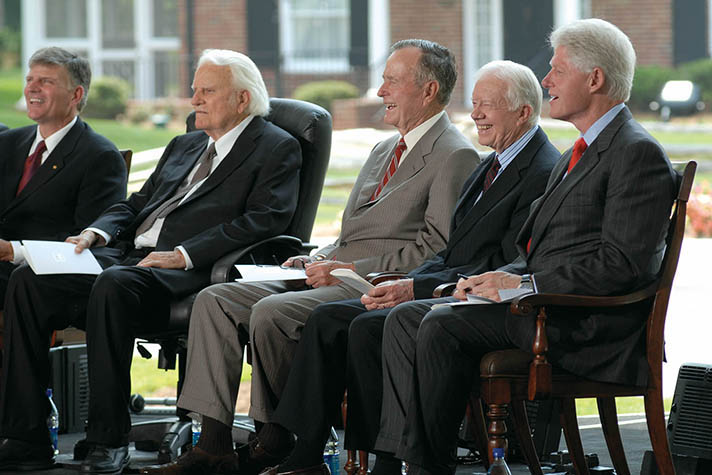
After sharing that introduction, you could ask your class: ??? Has anyone here ever have the opportunity to “speak truth to power” — or know someone who did?
In our lesson for today from Acts 26, the Apostle Paul “speaks truth to power,” and shares the Gospel with some rulers and kings.
CONTEXT
We left the Apostle Paul in Acts 22, when he was accosted by the Jews in a Temple riot, then he was taken by the Romans to the Antonia Fortress in the city — and he shared a witness with the Jews, both of his own testimony, and of the basic facts of the gospel, from the steps of the fortress.
At the end of Chapter 22 he is released from prison, but brought before the Jewish Sanhedrin for a trial. Again a riot broke out, and the Romans rescued him. The Jews sought to kill him on the road, but the plot was discovered, and Paul was brought to Caesarea, to the Roman Governor, Felix. In Chapter 24 Paul shares his testimony with Felix, who procrastinated, (hoping for a bribe 24:26) and stayed there two years.
In Chapter 25 Paul is then brought before Festus (who had by now replaced Felix as the Governor) and the Jews tried to get Festus (who wanted to cultivate good relationships with the Jews) to send Paul back to Jerusalem for trial. Paul knew that was just another trap, so he cried: “I appeal to Caesar.”
This “appeal to Caesar” is a very specific technical term. In Alan Bandy’s Illustrated Guide to the Apostle Paul he says this is called the “provocatio.” It is an appeal to go to Rome for trial within a certain amount of time. Bandy says this was “a legal masterstroke” because it took him away from the Jews’ plots to assassinate him, and he was now under Rome’s protection, and he was guaranteed to go to Rome and get to share Christ there, just as the Lord told him in 23:11)
During this time, King Agrippa came to visit Festus. (Dr. Bandy tells us this is Agrippa II, the last of the family line of Herod the Great. His territory included what is today Lebanon, and also Galilee. ) During the visit, Festus told Agrippa about Paul, and he said he would like to hear this man himself (25:22).
This brings us to Acts 26, where in :1 King Agrippa tells Paul to speak for himself, and in :2 Paul “stretched out his hand and proceeded to make his defense.”
In :2-18 Paul shares his testimony (which we studied last time in Acts 22) and then addresses King Agrippa personally in :19-29, which is our focus passage for this week.
OUTLINE
I. Sharing the Gospel (:19-23)
II. Responses to the Gospel (:24-29)
TEXT
I. Sharing the Gospel (:19-23)
In :19 Paul makes the statement: “So, King Agrippa, I did not prove disobedient to the heavenly vision.” He’s referring here to how Jesus appeared to him on the Damascus road (which he had just told King Agrippa about in the first part of his message, not in our focus passage). When Jesus spoke to Paul in Acts 9, He told him in :6: “It will be told you what you must do.” Then the Lord spoke to Ananias in a vision and told him in :15 to tell Paul: “he is a chosen instrument of Mine, to bear My name before the Gentiles and kings and the sons of Israel.” So Jesus appeared to Paul in a vision and told him He had some things for him to do; and then He appeared to Ananias in another vision and told him what that was: that Paul was be a witness to the Gentiles for the Gospel.
Paul tells King Agrippa here: I did not prove disobedient to this. He DID what the Lord commissioned for him to do (in fact, he was doing it right then, witnessing to Agrippa and all who were gathered.)
A question of application for US could be something like: Am I disobedient to what the Lord has called ME to do?
— We should all seek to know: What is God’s call on my life? Some may know; if someone doesn’t, they need to spend some time seeking God, for what He wants them to do for Him. God has gifted ALL His people to serve, so we need to discover what His gifting/calling for us is.
— Second, if we know what He has called/gifted us to do, then like Paul we need to make sure we can say, “I am not disobedient to this call.” Challenge your group: are you actively DOING what God called you to do. (One of the saddest verses to me in the Old Testament is Psalm 42:4, “For I USED TO go along with the throng and lead them in procession to the house of God …”. He USED TO! But somewhere along the way, he stopped. Challenge your members not to stop doing what God has called them to do; don’t be disobedient to the Lord’s call on YOUR life, like Paul was not to his.
Then in :20 Paul continues: “but kept declaring both to those of Damascus first, and also at Jerusalem and then throughout all the region of Judea, and even to the Gentiles, that they should repent and turn to God, performing deeds appropriate to repentance.”
Paul says I was not disobedient, I DID share the gospel with all these groups — even the Gentiles. But again, do you see the important element of the Gospel that he mentions here:
“that they should REPENT and turn to God, performing deeds appropriate to REPENTANCE.”
Here again we see the priority of REPENTANCE in the Gospel.
We’ve mentioned the vital nature of repentance several times in recent lessons, but the fact is, we KEEP SEEING IT IN ACTS! This just emphasizes to us just how important the doctrine and practice of repentance is. We see it repeatedly in Acts, for the reason that repentance is essential to the Gospel, and could not be left out. Remember in 20:21Paul told the Ephesian pastors that his essential message that he did not hold back on, was “repentance towards God and faith in our Lord Jesus Christ.”
So again we see the priority of repentance.
Notice also a couple of things this verse teaches us about repentance:
1) It clarifies that repentance is a TURNING. The Greek word for repentance, “meta-noeo” literally means “after/to think.” I like the definition that repentance is a change of mind, that leads to a change of direction in the life. The Prodigal Son is a great eaThis verse emphasizes that. It says “that they should repent and TURN TO GOD.” The word “turn” here in Greek is “epi-strepho,” which means to “turn,” or “return.” It’s used a number of places in scripture of returning:
— Luke 2:39 Mary & Joseph “return” to Galilee and Nazareth
— Acts 15:36 Paul tells Barnabas, let’s “return” to the cities we visited in our first mission trip.
So repentance is a “turning/returning.” Our whole problem in sin is that we have turned away from God to our own way (Isaiah 53:6 “All we like sheep have gone astray, each of us has turned to his own way.” Sin is turning away from God to our own way.
Repentance is turning BACK, “returning” to God and the way we should have been walking in.
Thus we see again the vital role of repentance in salvation. We’ve seen must repent to be saved (Acts 20:21, Luke 13:3). This emphasizes that salvation is NOT just a matter of saying we have faith in Jesus. We must repent of our sins: we must TURN BACK to God from our disobedience. The whole problem of sin is that we have left God, for substitutes for Him. (Romans 1:23) In salvation we admit that we have sinned and turned from God, and RETURN to Him, to love and obey Him. There is no salvation without repentance.
There’s a new Dietrich Bonhoeffer movie coming out later this month. Bonhoeffer is perhaps best known today for his book The Cost of Discipleship, in which he criticizes what he calls Cheap Grace. You could share this quote — maybe with a slide like this one — and perhaps discuss it with your group:

But make no mistake: this is a NEEDED emphasis today. So many people today just want to claim to be Christians, who have not repented of their sins. They just want to continue to live in their same sins, and claim to be loved and forgiven by God. Our members need to be aware; their loved ones need to be aware; people we encounter need to be aware: THERE IS NO FORGIVENESS WITHOUT REPENTANCE. THERE IS NO SALVATION WITHOUT REPENTANCE. Re-emphasize Jesus’ words in Luke 13:3, “Unless you repent, you will all likewise perish.” It is not enough to just say we love God. We must TURN BACK/RETURN to Him. Repentance is a turning.
2) Then he says in :20 that when there is a turning back to God, they will be “performing DEEDS appropriate to repentance.”
Repentance is a turning, which will express itself in particular, specific ACTIONS. It is a change of mind, yes, but if it is really a change of mind it will also lead to a change in DIRECTION: and Paul shows us here that means DEEDS/actions!
— John the Baptist showed us this at the beginning of his ministry that real repentance includes specific actions. In Luke 3 when he preached repentance, he said in :8 “Therefore bring forth FRUITS in keeping with repentance.” “Fruits” means DEEDS; fruits means actions. In :10 the crowds asked him: “Then what shall we do?” What specific actions shall we take? Then in :11-14 John gave them some some specific applications:
— :11 “The man who has two tunics is to share with him who has none.”
— :13 to tax collectors, “Collect no more than what you have been ordered to.”
— :14 to soldiers: “Do not take money from anyone by force, or accuse anyone falsely, and be content with you wages.”
Do you see how SPECIFIC these things are? John said these are “deeds of repentance.” This is just what Paul was preaching about here: “performing DEEDS appropriate to repentance.”
Real repentance will be specific, with specific applications.
Here’s an example from Harry Poe’s biography of C.S. Lewis:
“Owen Barfield frequently commented that he never charged his mind about anything but Lewis was always changing his mind. To change the mind is the meaning of the word in the Bible that is usually translated “repentance.” Lewis was always submitting his life to Christ to be changed. He was always renewing his mind. He understood the New Testament concept of the atonement as involving dying with Christ. He continually submitted habits and attitudes to be killed, as he graphically portrayed in The Great Divorce. How this happened appeared in little ways over many years.
In his early years as an undergraduate and later as a young fellow at Magdalen, Lewis made many offhand remarks about other undergraduates at Oxford or fellows at Cambridge whose vulgar (I.e., unsophisticated and socially inferior) speech betrayed them as not real gentlemen. They were not the sort with whom he could become seriously acquainted. He was a snob and had been for years. After his conversion, however, he began to change. His attitude toward other people began to change. By 1939, he could love the company of a funny little man with the crudest of cockney accents. Charles Williams became his dearest friend. Such a change in Lewis is remarkable.”
(Harry Lee Poe, The Making of C.S. Lewis, pp. 338-339)
This is an example of specific DEEDS of repentance: Lewis used to have a snobbish attitude towards others, but he repented of that attitude, and began to love them instead. Repentance is specific.
So if we really repent today, we too will perform deeds appropriate to repentance. We will change some specific things in our lives: stop specific sins; start obeying God in specific ways. Challenge your group to actively, specifically repent of specific words, deeds, and attitudes in their own lives. If we aren’t changing specific things in our lives, like C.S. Lewis did, then we are not really repenting. John said “bring forth fruits in keeping with repentance.” Real repentance will lead to specific DEEDS of repentance.
Then Paul continues in :21+:
21 For this reason some Jews seized me in the temple and tried to put me to death. 22 So, having obtained help from God, I stand to this day testifying both to small and great, stating nothing but what the Prophets and Moses said was going to take place; 23 that the Christ was to suffer, and that by reason of His resurrection from the dead He would be the first to proclaim light both to the Jewish people and to the Gentiles.”
Here again Paul shares some of the basic elements of the Gospel:
— “the Christ was to suffer” — His death on the cross
— “by reason of His resurrection” — His resurrection.
This reminds us of I Corinthians 15: where Paul declares the basics of the Gospel: “Christ died for our sins according to the scriptures, and that He was buried, and that He was raised on the 3rd Day according to the scriptures.” Those same elements are found here: “He suffered” (“Christ died for our sins”) and “His resurrection” (“He was raised on the 3rd day’)
These are key elements of the Gospel, that we have mentioned numerous times before. Christ’s death and resurrection are the heart of the Gospel. We need to share that when we witness. Now let me be clear: there are a lot of ways we can “witness;” through our lifestyle, or by doing good deeds, or quoting a general scripture or inviting someone to church — all these things are good, and God can use them. Do these things! But when we share “the Gospel,” we need to be sure that we always include the death and resurrection of Jesus for our sins.
I say this because that doesn’t always happen, especially in these days of theological laxity and compromise. Not long ago I was at a funeral service where the pastor gave an “invitation.” It was actually a good invitation in many ways — he talked about coming back to God and so on, — but afterwards I realized he never mentioned the death of Jesus on the cross for our sins! And that is a big omission. Christ’s death on the cross for our sins, and His resurrection, are the heart of the gospel. Let’s make sure we always share those things when we share the gospel.
Also notice that both Acts 26 and I Corinthians 15 mention the scriptures. I Corinthians 15 says He died for our sins “according to the the scriptures” and rose “according to the scriptures.” Here in :22 he says this is “nothing but what the Prophets and Moses said was going to take place.” In other words, he was saying, I didn’t make this message up. This was all prophesied in the Old Testament scriptures: the Prophets, and Moses (the Law).
For a GROUP EXERCISE you might pass out some Old Testament passages for your group to read, including:
— Genesis 3:15 “And I will put enmity between you and the woman, And between your seed and her seed; He shall [a]bruise you on the head, And you shall bruise him on the heel.” Here God is speaking to the serpent, predicting that One will come who will “bruise” (literally “crush” you on the head). Theologians call this the “prot-evangelium,” or “the first gospel.”
— Deuteronomy 18:15 “The Lord your God will raise up for you a prophet like me from among you, from your countrymen, you shall listen to him.”
— Isaiah 53:6 “All of us like sheep have gone astray, each of us has turned to his own way; but the Lord has caused the iniquity of us all to fall on Him.” (Many other verses in Isaiah 53 as well!)
— Psalm 16:10 “For You will not abandon my soul to Sheol;
Nor will You allow Your Holy One to undergo decay.”
— Psalm 110:1 “The LORD said to my Lord, ‘sit at My right hand, until I make your enemies a footstool for Your feet.’”
These are just some examples, you can add others to them as well. But talk through these as they are read, and explain how these verses and many others from the Old Testament, predicted what God would do for us in Jesus. This is another very powerful argument for the Gospel: so many religions are founded on the personality or vision of just ONE MAN: Joseph Smith with Mormonism, Mohammed and the Koran, etc. But the Bible was written by about 40 authors, over 1500 years! It is not the product of any one man. The Gospel that Paul shared — and that WE are sharing today — is not the product of any one man’s imagination. It is rooted in all the scriptures of the Old Testament.
We see this in Luke 24:27 when Jesus appeared after His resurrection: “Then beginning with Moses and with all the prophets, He explained to them the things concerning Himself in all the Scriptures.” And in His commission in Luke 24:44-48 He tells the disciples:
“These are My words which I spoke to you while I was still with you, that all things which are written about Me in the Law of Moses and the Prophets and the Psalms must be fulfilled.” 45 Then He opened their minds to understand the Scriptures, 46 and He said to them, “Thus it is written, that the Christ would suffer and rise again from the dead the third day, 47 and that repentance for forgiveness of sins would be proclaimed in His name to all the nations, beginning from Jerusalem. 48 You are witnesses of these things.”
Again Jesus emphasizes here: He didn’t just appear and claim these things. They were prophesied in the Old Testament scriptures, thousands of years beforehand. And that should give US great confidence as we share the gospel today too! Our gospel doesn’t rest on the shaky foundation of any one man’s revelation (like so many others do!) but on the broad foundation of dozens of prophets and prophesies over 1500 years! It is a firm foundation.
“How firm a foundation, ye saints of the Lord, is laid for your faith in His excellent word”! (Might be a good song to sing if you have a worship/opening assembly time for your group Sunday – or just quote it in the lesson here.)
II. Responses to the Gospel (:24-29)
:24 While Paul was saying this in his defense, Festus *said in a loud voice, “Paul, you are out of your mind! Your great learning is driving you mad.” 25 But Paul *said, “I am not out of my mind, most excellent Festus, but I utter words of sober truth. 26 For the king knows about these matters, and I speak to him also with confidence, since I am persuaded that none of these things escape his notice; for this has not been done in a corner. 27 King Agrippa, do you believe the Prophets? I know that you do.” 28 Agrippa replied to Paul, “In a short time you will persuade me to become a Christian.” 29 And Paul said, “I would wish to God, that whether in a short or long time, not only you, but also all who hear me this day, might become such as I am, except for these chains.”
A. The Rejection
??? Why do you think Festus would say “Paul, you are out of your mind”???
(He had just mentioned the Resurrection of Jesus from the dead in :23, “by reason of His resurrection from the dead …”. He obviously believed that the resurrection of Jesus was too far-fetched to believe, so he said, “You are out of your mind.”
You/your group can share your answers.
But then I’d make the point that this is one kind of response we can expect from many people: they will think we’re crazy for believing that Jesus rose from the dead. Now, when you study it, as many have, you will see that Jesus rising from the dead is actually a very reasonable response to the facts and witnesses of the end of Jesus’ life. But many will respond like Festus here, and reject it out of hand. They may even say, “You are out of your mind,” like he did.
If you want some more group discussion question here, you might ask:
??? What are some elements of the Christian message that people might find hard to believe today??? (Or: have you had any experience with someone telling you there is part of the Christian message that they just can’t believe?)
(Some might include: that God would come down to earth as a man; or that Jesus was born of a virgin — many stumble over that; or they find it hard to believe that what Jesus did on a cross 2000 years ago will somehow save them today; or like Festus here, they can’t believe He rose from the dead; or maybe they just find it hard to believe the Bible is true.)
B. The Witnesses
But Paul says in :25, “I am NOT out of my mind,” and he counters with a very important statement in :26: “this has not been done in a corner.”
In other words, this isn’t some “secret thing” that happened in some remote spot, that no one saw. This happened in public. There are many witnesses to it.
— Paul refers to this in I Corinthians 15, where he shares the basics of the Gospel, and he says: “And He appeared to more than 500 witnesses at one time, most of whom remain until now, but some have fallen asleep.” He says there that after Jesus’ resurrection, He was seen by 500 people! These people saw Him, and testified to what they had seen. And they went to their graves — many of them under pain of torture — testifying that they had seen Jesus alive!
Richard Bauckam’s book Jesus and the Eyewitnesses goes into detail on the names of the people in the Gospels: Bauckham asserts that these are people, many of whom were still alive when the scriptures were written, who saw and testified to what they had seen and heard. These people were still alive when the Gospels were written. People knew them! If what they said was not true, people would have known it. “This has not been done in a corner”!
— “This has not been done in a corner”: this didn’t unfold in some remote jungle where no one saw or recorded it. It happened in the Roman Empire, during the reign of rulers and authorities, whose names were recorded and who show up in archeological digs. This is the significance of passages like Luke 2, which says it happened “during the reign of Caesar Augustus … when Quirenius was governor of Syria,” and so. These things happened in a very literate society, under the auspices of one of the greatest and most organized empires ever, with all kinds of facts from history and archeology backing it up!
—Also as we referenced in the last section: it was not done “in a corner” because of the testimony of the scriptures that gives it all historical context. Jesus didn’t just rise up from “nowhere;” His coming was prophesied — and not just by one “prophet,” but by numerous Old Testament passages. And the way He would come, and just what He would do, were clearly set out by those scriptures. “This has not been done in a corner!”
So we too can confidently tell people of Jesus and the Gospel: “This was not done in a corner.” We can cite witnesses, and Prophets, and manuscripts, all of which bear public witness to Who Jesus is and what He did. “This was not done in a corner”! So like Paul let us confidently share Christ publicly and in the open doors He gives us with individuals each week.
C. The Question:
In :27 Paul pressed an important question to King Agrippa:
‘King Agrippa, do you believe the Prophets? I know that you do.”
He was pushing the question here: do you believe all this?
I think sometimes this is where we as Christian witnesses often fail: we don’t ask for a commitment. We might share a testimony, or a witness with someone — but do we ask them to take the next step and make a commitment to the Lord?
As an illustration, Salesmen might call this “closing the sale.” You’re made your presentation, now see if they want to do it. Close the deal!
— like Paul ask, “Do you believe this?”
— The old Evangelism Explosion presentation taught us to ask something like: “Does this make sense?” And then,”Is there any reason why you would not like to receive Jesus as your Lord & Savior right now?”
I think those are pretty good questions, and they are in the same vein as what Paul was doing here. Close the deal. Ask for a commitment.
D. The Procrastination
“28 “Agrippa replied to Paul, “In a short time you will persuade me to become a Christian.”
You should know that this verse can actually be read either of two ways in Greek:
— That he is saying that at this rate, in a short time, Paul will persuade him to become a Christian.
— OR: “Do you think that in such a short time, you are going to persuade me to become a Christian?”
Either way, King Agrippa did NOT receive Jesus that day. He hesitated; he procrastinated. “Maybe I’ll do it in a short time.” Or “I need a lot longer than that to become a Christian.” He didn’t receive it that day — and that is the most important thing.
This kind of procrastination is one of the devil’s most useful strategies: I’m not going to “reject” Jesus; I’ll do it some time — just not NOW! But this is actually one of the greatest traps. Because “tomorrow never comes.”
This is why II Corinthians 6:2 says “Behold NOW is the acceptable time; NOW is the day of salvation.” If a person is every going to be saved, it’s never going to be “tomorrow;” it’s going to be in some present moment; some “now.” And I have seen in recent days in my own family (I have lost 3 close loved ones in the last 3 months: my stepdad, our kids beloved “Uncle Don,” and now my mom last week) we do not know if we have any tomorrow.
So share that with your group Sunday; encourage any of them who have not “nailed it down” to put their faith in Jesus as their Lord & Savior TODAY — and also challenge them to share their faith with some family member, friend, or other loved one, who need to give their life to Him today.
In 2005 Thom Rainer wrote a very interesting book called Unexpected Journey. It details his interviews with 13 people who came to Jesus from other faiths: Hinduism, Buddhism, witchcraft, etc. I’m sure I’ll be sharing some more from this book in upcoming lessons. But one of the common themes I’ve seen in this book so far, is that several of the people have said things like: “This was the first time I really heard the Gospel. No one had ever really explained it to me.” And some of them had known Christians and been in churches!
So this challenges us today: SHARE THE GOSPEL! Explain it to someone! Like Festus and King Agrippa, they may or may not receive it now, but plant those seeds that God will use. Paul is a great example to us all through the Book of Acts, of one who constantly shares the Gospel. Let’s ask God to help us and our class members to share the good news with someone this week!
___________________________________________________
— If you’ll type your email in the “follow blog via email” blank, WordPress will automatically send you next week’s lesson and you won’t have to search for it.
— And if you write something in the Comments below, I’ll be sure to pray for your and your group by name this week.
(Thank you for your continued prayers for me and my wife Cheryl as she recuperates from her stroke. She has new victories every week, and she moved her left index finger for the first time this week! Thank you for praying! And please add your prayers for our whole family as my mom passed away this weekend. It is a sad time for us all. But we’re grateful for God’s grace and the hope of glory that we have with Him!
Per my licensing agreement with Lifeway:
— These weekly lessons are based on content from Explore the Bible Adult Resources. The presentation is my own and has not been reviewed by Lifeway.
— Lifeway resources are available at: goExploretheBible.com and: goexplorethebible.com/adults-training
— If you have questions about Explore the Bible resources you may send emails to explorethebible@lifeway.com


 shawnethomas
Your comments on the lessons are so helpful to me as I teach a senior adult ladies class. Thank you so much.
Thank you for bringing these insights about the Word to me, teacher in Adult SS class. Bless you and the calling God has given you. He is always in control. If we allow. Candy/ SC
Thank you for your time and dedication given in preparing these lessons for us. I am honored to lead the most seasoned ladies class in our church. They are a blessing and inspiration to me. Sadly over the past 6 month, 3 of these dear saints have gone to be with Jesus. Their ages were 99, 96, and 80. Lives spent serving the Lord. Bless you as you continue faithfully following God’s path. Linda from TN
So sorry to hear of your Mom’s passing. Keeping your family in my prayers. Thanks for your help in explaining the lesson it is a big help. Clydean from FL
are you doing the lessons for 2025?
I love your perspective. I use your thought in every class I teach.
Deborah
Aw, I’m so thankful that they are helpful to you Deborah. YES I absolutely plan to keep doing these in 2025! Praying for you this weekend!