
Includes a suggested introduction to the lesson, text outline and highlights, illustrations you can use, discussion questions for your group, and spiritual life applications you can make. A video version of this overview is available on YouTube at:
INTRODUCTION:
ILLUSTRATION:
After World War II ended, U.S. President Harry Truman was driven through Berlin, which had been devastated by Allied bombing and Russian artillery.
“On Wilhelmstrasse (German for King “Wilhelm’s street”) Truman’s car pulled up beside the Reich Chancellery and the shell-blasted stone balcony where Hitler had harangued his Nazi followers. Truman did not get out. ‘It is a terrible thing,” he began, knowing he was expected to say something, ‘but they brought it on themselves. That’s what happens when a man overreaches himself.’ It was all he could find to say.” (David McCullough, Truman, p. 414)
Truman’s words may not have been what some consider “eloquent,” but they still rang true: “They brought it on themselves.”
We all know situations like this today, too, don’t we? People sin against God and pay the consequences. Like Truman said: “They brought it on themselves.”
That expression could easily serve as the theme for the Book of Judges, and today’s lesson especially, which talks about the “Consequences” of sin.
CONTEXT:
Last time we finished our brief study of the Book of Joshua, which related victory after victory that God gave Israel as they took the Promised Land (Ai due to Achan’s sin was an exception). We left off with Joshua exhorting the people of Israel to commit themselves to worship Yahweh and refrain from idolatry.
Next comes the Book of Judges, which begins well, with Chapter 1:1-26 describing more victories as Israel continued to conquer the land — it sounds very much like the Book of Joshua.
But then in :27, things begin to turn: it tells how a number of the tribes of Israel did NOT drive out the Canaanites.
Chapter 2 then relates how Israel served Yahweh all the days of those who saw God’s great work — but then :10 says “there arose another generation after them who did not know the Lord, nor yet the work which He had done for Israel.”
This brings us to our passage for this week, which opens with 2:11, “Then the sons of Israel did evil in the sight of the LORD …”.
Unfortunately that’s the basic story of the whole Book of Judges. Joshua told of victory after victory; sadly Judges is primarily a story of repeated sin and its consequences. But it contains some lessons which we and our loved ones would do well to pay attention to, today!
OUTLINE:
I. The Idolatry of the People (:11-13)
II. The Consequences of Sin (:14-15)
III. The Cycle of Unfaithfulness (:16-19)
IV. The Test of Adversity (:20-23)
TEXT: Judges 2:11-23
I. The Idolatry of the People (:11-13)
:11 “Then the sons of Israel did evil in the sight of the LORD and served the Baals, 12 and they forsook the LORD, the God of their fathers, who had brought them out of the land of Egypt, and followed other gods from among the gods of the peoples who were around them, and bowed themselves down to them; thus they provoked the LORD to anger. 13 So they forsook the LORD and served Baal and the Ashtaroth.”
So despite Joshua’s final warning to avoid idolatry, Judges tells us here that Israel did turn to serve false gods.
NOTICE the specific names involved here:
— Both :12 & 13 say “they forsook the LORD.” We’ve mentioned several times that when you see “LORD” in the Old Testament in all capital letters, it means it’s “YHWH”/Yahweh in the Hebrew text, not “Adonai” or “Lord.” This is God’s personal name which He gave Moses at the burning bush.
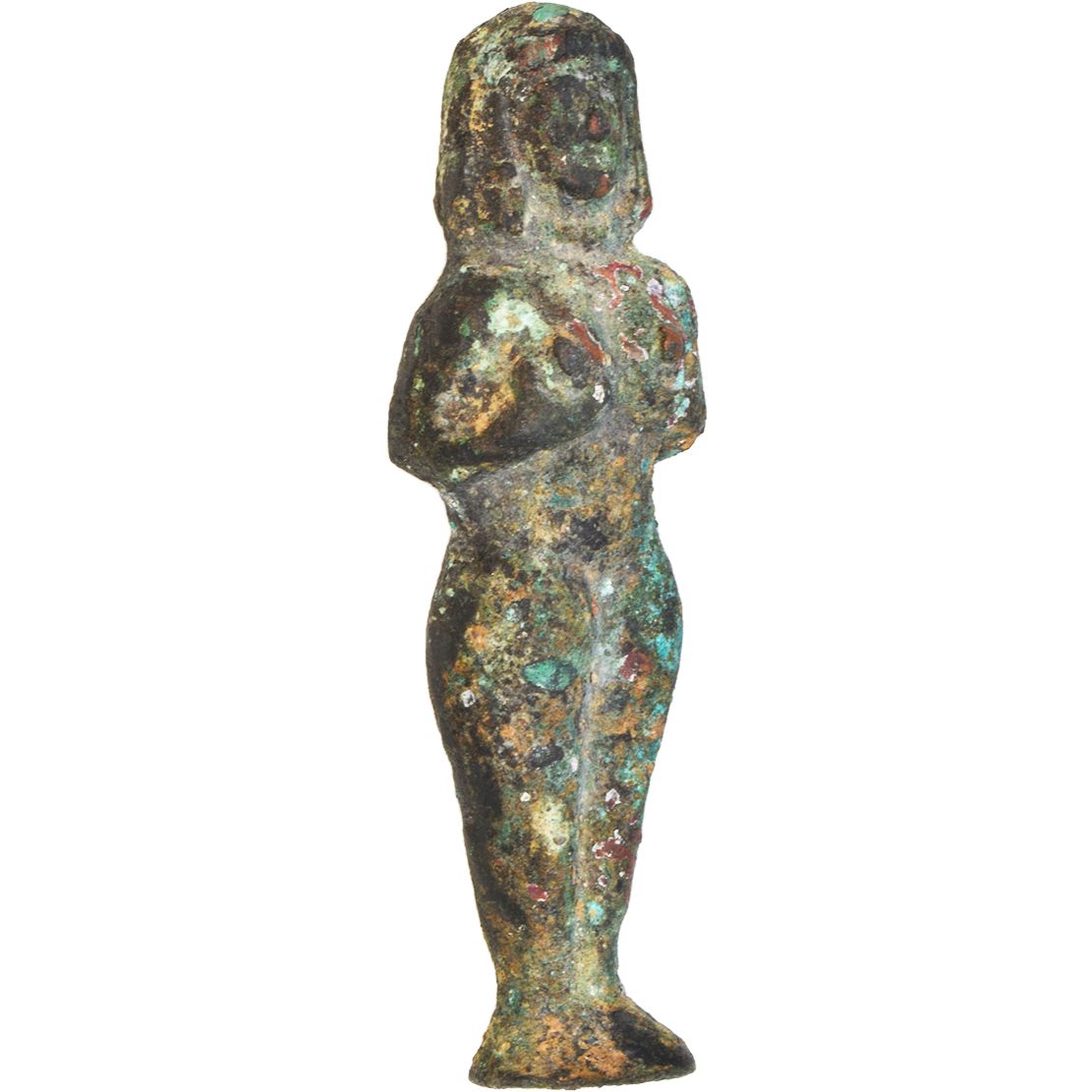
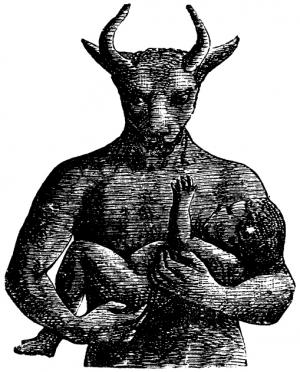
— and it says they “served Baal and the Ashtaroth.” These two are personal names of FALSE gods: “Baal” means “Master,” he was a harsh Canaanite god. “Ashtaroth” is from the Canaanite female goddess “Ashtoreth,” the “oth” at the end makes it plural. So there were many of these goddesses (as there were Baals also).
You might display some images of Baal/Ashtereth for your group:
This first is one of Ashtereth:
This next is one of Baal:
This one of Baal is particularly creepy to me: especially as many of the Canaanite cults involved child sacrifice.
So “Baal” and “Ashtoreth” are names of particular gods. The point here is, it’s not enough to worship just “any” god. We must worship the one true God of the Bible: Yahweh God; the God who made heaven & earth; the God who called Abraham, and rescued Israel from Egypt; the God and Father of the Lord Jesus Christ. THIS God is the One we are to worship, and have no other gods besides Him, as the First Commandment states.
(This is why I think it’s important that we translate “LORD” here as “Yahweh.” The text is calling these gods by name:
— we’re not to worship Baal;
— we aren’t to worship Ashtoreth
— we are to worship THIS God; Yahweh by name; the one true God.
This is something that is very applicable to us today. Many people in America today think today that it doesn’t matter which god you serve, as long as you’re sincere in your faith.
ILLUSTRATION:
English historian Edward Gibbon wrote in his epic History of the Decline & Fall of the Roman Empire:
“The various modes of worship which prevailed in the Roman world were all considered by the people as equally true; by the philosopher, as equally false; and by the magistrate, as equally useful.”
You could ask your GROUP TO SHARE what they think about this quote. Point out that many people today have this same attitude, that “all religions are equally true.” But to assert that, is basically also to say that they are all equally false. All these contradictory faiths cannot possibly all be true.
The scripture teaches us that there is ONE TRUE GOD. “Yahweh, He is God,” as the people called out when Yahweh made the fire fall from heaven on Elijah’s sacrifice. Jesus said “I am the way, the truth, and the life; no one comes to the Father except through Me.” The Bible says it does matter who you worship, for there is only one true God.
But Israel DID forsake the true God to worship idols. The text uses three expressions for this:
— It says they “followed” other gods. This is the Hebrew word “halak,” “walked.” They walked after these gods.
— they “bowed down” to these false gods. Bowing down is a mark of submission and worship.
— they “served” them. The Hebrew word “abad,” to work for/serve as a subject or slave; worship.
So these were ways that Israel showed they worshiped these false gods.
???DISCUSSION/APPLICATION QUESTION???
“How do people today demonstrate that they are worshiping other gods than Yahweh/Jesus?”
(—Some of the same ways: they bow down to them.
ILLUSTRATION:
I was on a flight to India on mission, and over the Middle East it came to the hour of Muslim prayer, and all of the sudden all of the Islamic passengers got out into the aisles and bowed down, praying towards the east. The literally bowed down to their god.
So people still do this today.
— And people still “walk” after other gods like Israel did. People today also live their life for the god they choose: maybe a false religion that they base their life around; or maybe their god is money, and they “walk after that,” basing everything they do around money, or pleasure, or popularity, or whatever. People still “walk after” or “serve” their gods today. In fact, the truest indicator of who or what you worship, is what you are “walking after” or serving with your time, money, and effort. Is it really the God of the Bible, or is it someone or something else?)
So people today worship and serve all kinds of gods, just like Israel did in the days of the Judges. In fact, we will see in our brief study of Judges that sadly, there are a lot of similarities between Israel in the days of the Judges, and the United States of America today!
II. The Consequences of Sin (:14-15)
:14 “The anger of the LORD burned against Israel, and He gave them into the hands of plunderers who plundered them; and He sold them into the hands of their enemies around them, so that they could no longer stand before their enemies. 15 Wherever they went, the hand of the LORD was against them for evil, as the LORD had spoken and as the LORD had sworn to them, so that they were severely distressed.
GROUP EXERCISE
What were the consequences of Israel’s sin? Ask your group to point out what they see in :14-15.
(Answers can include:
— :14 ‘the anger of the LORD burned against Israel.” This shows His attitude. God was not like, “Oh well, that’s too bad …”. No, it says His “anger burned.” Romans 1:18 speaks of how “the wrath of God is revealed against all ungodliness and unrighteousness of men.” Hebrews 12:29 says “For our God is a consuming fire.” When we sin, it turns God against us, and makes us His enemy. If there is any enemy you don’t want, it’s the Lord!
— :14b “He gave them into the hands of plunderers … He sold them into the hands of their enemies.” When they were following the Lord, He gave them victory after victory. But when they followed other gods, He gave them up to their enemies. He was no longer helping them. It’s like when the Spirit departed from Samson and he couldn’t defeat the Philistines any longer.
— :15 “Wherever they went, the hand of YHWH was against them for evil.” The word “evil” here is the Hebrew word “ra-ah.” It can have a lot of shades of meaning, but it’s literally the word for “bad.” Wherever they went, whatever they did, God made sure things were “bad” for them. It was like a curse on their life. This was the consequence of their sin.
— :15b “so that they were severely distressed”
The Hebrew here for “severely distressed” is “yatzar,” which literally means “to be in a narrow place; in a strait.”
This is a common Hebrew picture: When you’re in trouble, they say you’re in a “narrow place.” We use a similar expression: “I’m in a tight spot.” That’s what this is like. And this is why Psalm 18:19 says when God rescued David, he says He “set me in a broad place.” God delivered him from that “tight spot”!
But right now, Israel was in a “tight spot,” and it was directly because of their sin against God.
NOW TO APPLY THIS:
— Not all our “tight spots” are a result of our sin. Think of Israel in Egypt. They weren’t enslaved as a result of their sin; it was just the oppression of Pharaoh.
Or Peter in the New Testament. H was in a “tight spot” in prison. It wasn’t his fault; Herod saw it pleased the Jews to kill James, so he arrested him too.
Similarly, not all of our “tight spots” today are a result of our sin.
BUT WE NEED TO UNDERSTAND THAT SOME ARE. A key application point here is to realize that IF the “tight spot”we are in, is a result of our sin, the only way we’re going to get out of it is to turn from that sin.
— Maybe there’s a sin in our life we need to turn from
— Or maybe it’s a loved one we have. We may need to share with them that they’re never going to get out of that “tight spot” they’re in, until they repent of the sin that got them there. Some of us may need to ask God for the grace and the specific opportunity to share this with a loved one this week.
One thing that God’s word is very clear about, is that there are CONSEQUENCES to sin: “the wages of sin is death” (Romans 6:230 and so on.
CONSEQUENCES ILLUSTRATION:
(Robert Montgomery Smith Jackson was a doctor who lived in the Johnstown, Pennsylvania area in the 1800s.
“In his spare time, he tended bar at the hotel and would be remembered for years after for the two jars he kept prominently displayed on one shelf, flanked on either side by whiskey bottles. In each jar, preserved in alcohol, was a human stomach. One had belonged to a man who had died a natural death, and was, according to all who saw it, an exceedingly unappetizing sight. But it was, nonetheless an improvement over its companion piece, which, according to its label, had belonged to a man who had died of delirium tremens (from alcoholism). When setting out drinks, the doctor seldom failed to call attention to his display. The result was that his bar became the best patronized of any for miles about. Regular customers grew quite attached to the jars; word of it then spread far, and along with the iron springs, they appear to have been a major attraction at Cresson for several years.” (David McCullough, The Johnstown Flood, pp. 35-36)
That good doctor tried to dissuade people from drinking by showing them a dramatic picture of its physical consequences on the body, but sadly no one seemed to heed his warning.
But if we are wise today, we will understand that there are consequences to sin.
???DISCUSSION/APPLICATION QUESTION???
“What are some consequences of sin today?”
(— First and foremost, estrangement from God. All sin separates us from God. Isaiah 59:2 says “Your iniquities have made a separation between you and your God.” Sin will separate us from fellowship with God, and send us to hell. Even as believers it can harm our active fellowship with God, as Psalm 66:18 indicates: “If I regard iniquity my heart, the Lord will not hear.”
But sin has many other practical consequences on earth as well, that you can think of:
— financial consequences; consequences in relationships: broken marriages, estranged children and family members; physical health consequences/death; and on and on.)
As the title of our lesson this week indicates, there are “Consequences” for sin. And we can’t escape those consequences unless we repent and return to God.
But as we will see in our next point, the repentance we demonstrate must be genuine:
III. The Cycle of Unfaithfulness (:16-19)
“16 “Then the LORD raised up judges who delivered them from the hands of those who plundered them. 17 Yet they did not listen to their judges, for they played the harlot after other gods and bowed themselves down to them. They turned aside quickly from the way in which their fathers had walked in obeying the commandments of the LORD; they did not do as their fathers. 18 When the LORD raised up judges for them, the LORD was with the judge and delivered them from the hand of their enemies all the days of the judge; for the LORD was moved to pity by their groaning because of those who oppressed and afflicted them. 19 But it came about when the judge died, that they would turn back and act more corruptly than their fathers, in following other gods to serve them and bow down to them; they did not abandon their practices or their stubborn ways.”
These verses do describe a “cycle” that Israel repeats throughout Judges:
— They turned from God and were punished (as we saw in Pts. I & II)
— :16 says then the LORD raised up judges who delivered them. The Hebrew word “shaphat” can mean “to judge,” but it can also mean “to govern.” These are leaders that God raised up to help His people. The Book of “Judges” gets its name from the 12 Judges/leaders God raised up to lead Israel.
— :17 But they didn’t listen to the judges, but “turned aside quickly” after false gods again.
Verses 18 & 19 basically describe this same pattern again: the Lord raised up judges, but after the judge died, they would turn back and act even “more corruptly” it says, than their fathers did! The bottom line? “They did not abandon their practices or their stubborn ways.” (:19b)
Israel’s behavior here is a common one for many individuals and groups: temporary “repentance” when you get in trouble, but then go right back to sinning again, with no lasting change/fruit.
ILLUSTRATION:
From the life of John Newton, who grew up very rebellious against the Lord, before being saved as a slave ship captain:
“At the age of twelve, (John) Newton had a fall from his horse in the Essex countryside. As he got to his feet he saw that he had narrowly missed being thrown on top of a sharp spike protruding from a hedgerow. The realization that he been only inches away from being impaled on this spike made him give thanks to his Lord and Savior. As he praised the mercy of divine Providence for his narrow escape from death, he recognized that he was in no fit state to meet his Maker at the seat of judgment, so for a while he repented and mended his ways. However, he soon fell back into what he called “profane practices” and “greater depths of wickedness. ” (Jonathan Aitken, John Newton, p. 34)
Newton’s type of “temporary repentance” is common, isn’t it? We’ve all known people who “temporarily repented” of something, but then quickly went right back to it: family members, kids at school, work associates, etc.
DISCUSSION:
You/some of your group members might be able to share a situation like this that you’ve seen in someone.
This is how it was with Israel. There was never any lasting change in them; they just kept on doing the same things, revealing the same old sin nature. (that inhabits all of us!)
Now notice in the second part of :18, “The LORD was moved to pity by their groaning …”. Here is an important thing, not to be missed in all this: God truly cares about us! In fact, the reason why He allows so many of these “bad” things to happen to us, is to chasten us, and give us a chance to come back to Him, and to blessing, again.
But that phrase in Verse 19 is very descriptive of this kind of “temporary repentance”: “they did not abandon their practices.”
Here is the real test of repentance: is the person “abandoning their practices”? Or do they keep doing the same things they were always doing?
“Bring forth fruit in keeping with repentance,” John the Baptist said in Matthew 3:8 Real repentance bears fruit. You’ll see the difference in the life. Not that the person is now “perfect” in any sense; but is there change? Are they even genuinely trying to turn from the sin? Struggle is often the best test.
ILLUSTRATION/QUOTE:
PURITAN John Owen wrote: “If you are fighting sin, you are alive. Take heart. But if sin holds sway unopposed, you are dead.”
I like that! No one alive is perfect in their striving against sin. But if you’re fighting against it, it shows you are at least “alive” spiritually. You aren’t giving yourself over to it without a struggle. That should be an encouragement to us in our struggles against sin — and it should also give us hope for our loved ones who are actively fighting that battle as well.
IV. The Test of Adversity (:20-23)
20 So the anger of the LORD burned against Israel, and He said, “Because this nation has transgressed My covenant which I commanded their fathers and has not listened to My voice, 21 I also will no longer drive out before them any of the nations which Joshua left when he died, 22 in order to test Israel by them, whether they will keep the way of the LORD to walk in it as their fathers [c]did, or not.” 23 So the LORD allowed those nations to remain, not driving them out quickly; and He did not give them into the hand of Joshua.”
There’s a very revealing statement that the LORD makes in this section, in :20-21. He says He didn’t drive out some of the nations that were in the land, “in order to TEST Israel by them, whether they will keep the way of the LORD ….”. Someone might wonder, Why couldn’t Israel drive all the nations out right off? God specifically says He left them there to TEST Israel; to see if they would obey Him, or succumb to their way.
Testing can be an important part of our growth as individuals.
TESTING ILLUSTRATION:
Comes from the childhood of George H.W. Bush:
“The Yard of the Bush house on Grove Lane in Greenwich (CT) was dotted with grand trees, and the children knew without being told that those trees — no matter how tall—were to be climbed. The obstacles to success were not to be discussed. Dorothy Bush was fearless, and she expected her children to be fearless, too. It was her version of her Uncle Will Walker’s throw-them-in-the-water-and-make-them-swim strategy. In her father’s house she had learned that action was more important than words, that the ability to thrive in a contest – to knock an opponent out, to outrace a fellow runner- gave one a certain thrill, a certain status, a certain place in the world. Competition was essential to Dorothy Walker Bush—not mindless competition, but competition in order to pursue, test, and exhibit excellence.
And so the trees awaited. On sunny days, the ground dappled through leafy branches, the bark rough to the touch of young hands, Poppy Bush and his siblings would come racing out of the big shingled house and pick the day’s target. “Mother never seemed afraid,” George H. W Bush recalled. If a worried neighbor spotted a Bush child making a perilous climb, the well-meaning bystander would be thanked but sent on his way. When the inevitable falls and crashes came, well, that was part of life. “Of course, there would be scrapes and bruises from time to time, Bush recalled, “but it didn’t seem to faze Mother or her confidence in us.” Or, as the years passed, the children’s confidence in themselves.” (Jon Meacham, Destiny and Power, p. 24)
Dorothy Bush, as a good parent, used the trees in their yard to test and strengthen their children — and they did! This should speak to us today, too. We need to understand that just like Dorothy Bush tested her children, in the same way, God, as the Perfect Heavenly Father, some times leaves “trees” of sorts — many kinds of obstacles — in His children’s lives, in order to strengthen and test us.There are times in the Christian life when we don’t know WHY God does things, but we need to consider that it may be a test of our commitment and our faith. Sometimes we should just realize: “You know, this is probably a test!”
???DISCUSSION/APPLICATION QUESTION???
“What are some “obstacles” that God might use to strengthen and test us today?”
(Hardships in upbringing — how many times do we read of children brought up in poor/difficult circumstances, who overcame them and became great? Some might include physical handicaps; financial difficulties; temptations of various sorts that the person can overcome with God’s help if they will.
The point is, some of US today need to see some of our circumstances as tests of our faith and commitment.
— Will we “climb those trees”?
— Will we overcome those obstacles?
— Will we resist those temptations?
— Will we obey God regardless of what others around us are doing?
These questions are as real for us today, as they were for Israel in the time of the Judges. Let’s ask God for His grace and help to resist the temptations, overcome the obstacles, and glorify Him by our faith and obedience, even when others are not following Him.
___________________________________________
— Remember there is now a “PRINT” button at the end of the lesson on my blog, that you can hit to print out the lesson in its entirety.
— If you’ll type your email address in the “Follow blog via email” blank on my blog home page, WordPress will automatically send you next week’s lesson and you won’t have to search for it each week.
— And if you write something in the Comments on my blog or YouTube, my commitment is to pray for your and your group and any special request you make, by name this week.
Per my licensing agreement with Lifeway:
— These weekly lessons are based on content from Explore the Bible Adult Resources. The presentation is my own and has not been reviewed by Lifeway.
— Lifeway resources are available at: goExploretheBible.com and: goexplorethebible.com/adults-training
— If you have questions about Explore the Bible resources you may send emails to explorethebible@lifeway.com


Thank you for your help with our lessons each Sunday. I’m leading a class of senior ladies, some that have taught school for years and Sunday school for years. It makes me kind of nervous, though they say I’m doing a good job. It’s thanks to your help that I can dig deeper and find more to tell them. God bless you and your wife. I’m praying that she is better.
I really appreciate your lessons. I use them each time I teach a Lifeway Explore the Bible lesson, and they are always very helpful. I would appreciate prayer that my lessons will glorify Jesus each time I teach. Thanks!
Please pray for Scott & Cortney Graves as they will be teaching the Young Married Class at First Baptist Church – College Station as my wife and I (the normal teachers) will be on the road. Pray that the Lord will use them to speak powerful truth into the marriages represented in the class.
Thank you, Pastor Shawn. I appreciate this lesson – good illustrations. Practicing faith and obedience – actually DOING it will make ne stronger in faith and obedience. And also 21 God said, “I also will no longer drive out before them any of the nations which Joshua left when he died, 22 in order to test Israel by them…” I always thought the Israelites did not conquer the land just because they stopped fighting, but it was really a test. WOW! Good lesson for us today. God blesses us again and again when we are faithful to love Him, trust Him and obey Him – always with all our heart.