A Battle You Can’t Win

Psalm 2:1 asks: “Why are the nations in an uproar, and the peoples devising a vain thing?”
The Psalmist here asks “WHY” the nations are in rebellion against God, when the last word of :1 (in Hebrew, the word “riq”) means “void, empty, vain, in vain.” Why are they doing what has no possibility of succeeding? They cannot “win” vs. God!

But numbers of us today might do well to ask ourselves the same question: why do we attempt to “skirt” around what God has ordained, when we have no possibility of succeeding in those attempts?

Continue reading

Posted in Devotions/Bible Studies | Tagged , , | Leave a comment

Take The Initiative To Do Good

II Samuel 9:1 says: “Then David said, ‘Is there yet anyone left of the house of Saul, that I may show him kindness for Jonathan’s sake?'” As this story begins, which would culminate with King David taking the crippled son of Jonathan into his home and caring for all his needs, it is important that we note that it was DAVID who took the initiative here. No one from the house of Saul, or any of Jonathan’s relatives came to David and asked him if he would show kindness to them. No, HE took the initiative and sought to do them good.

In the same way, many of God’s people today need to be more zealous and purposeful in seeking to do good for others.

Continue reading

Posted in Devotions/Bible Studies | Tagged , , , , | Leave a comment

A Religion of the Heart

Psalm 1:2 says of the godly man: “But his delight is in the Law of Yahweh, and in His Law he meditates day and night.” It is significant that this very first Psalm sets the tone that it is the HEART that makes the difference in genuine religion, not merely routine deeds and practices. Those two words “delight” and “meditates” are key. Continue reading

Posted in Devotions/Bible Studies | Tagged , , , , , , | Leave a comment

Delight in His Word

Psalm 1:2 says of the man whom :1 declared blessed for avoiding the ways of the world: “But his delight is in the LAW of YHWH, and in His LAW he meditates day and night.” This is an example of Hebrew parallelism, which is the way they did poetry. This parallelism is synonymous — that is, it says a similar thing twice to emphasize a point. This parallelism demonstrates that delight reveals itself in meditation, or constant thinking. You think constantly about whatever it is that you delight in.

But what is revealing here is that in both parallels it is the LAW, the LAW which is the blessed man’s meditation and delight. Continue reading

Posted in Devotions/Bible Studies | Tagged , , , , , , , , , | Leave a comment

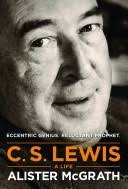
Notes & Quotes from C.S. Lewis: A Life, by Alister McGrath

20140124-135120.jpg
Some of my favorite quotes, and potential sermon illustrations from McGrath’s 2013 biography of Lewis. These are in order as they appeared in the book:

TRAIN UP A CHILD
“Both brothers inhabited imaginary worlds, and committed something of these to writing. Lewis wrote about talking animals in ‘Animal Land’ …”. (p. 14)
The seeds of Narnia were planted while Lewis was yet a child. What seeds are we planting in our children/grandchildren?

THE SERVICE OF LOVE
“There is no doubt that Lewis ended up doing all kinds of menial household chores — running to get margarine from a corner store, retrieving Mrs. Moore’s purse from the bus station, or responding immediately to the sudden collapse of Mrs. Moore’s bedroom curtain rails. But he was the only man in the household, and appears to have willingly pulled his weight to ensure its smooth running. These things had to be done, and Lewis did them. In any case, Lewis came to see such tasks as examples of the tradition of ‘courtly love’, which he declared to be a noble and honourable code of conduct by which a young man might ‘leap up on errands’ or ‘go through heat or cold, at the bidding of one’s lady.’ Lewis might have been able to invest such household chores with dignity and signficance by conceiving them as ennobling expressions of ‘courtly love.'” (p. 97)

IT’S NOT HOW YOU START THAT MATTERS
“His maiden lecture, given on Tuesday, 14 October at University College [Oxford], was attended by a mere four people.” (p. 108) Continue reading

Posted in Reviews, Sermon Illustrations | Tagged , , | 1 Comment

The Key To Contentment

Hebrews 13:5 commands us: “Make sure that your character is free from the love of money, being content with what you have; for He Himself has said, ‘I will never desert you, nor will I ever forsake you’.” It is interesting, upon first reading, to discover that the oft-quoted verse “I will never desert you, nor will I ever forsake you” (a quote from Deuteronomy 31 in the Old Testament) is used here in the context of money! But the key to understanding its use has to do with the phrase “being content”:

Continue reading

Posted in Devotions/Bible Studies | Tagged , , | Leave a comment

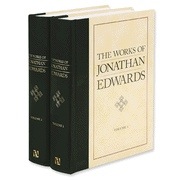
Notes & Quotes: Jonathan Edwards’ Sermon: “Praise, One of the Chief Employments of Heaven”

20140123-154406.jpg
SOURCE: The Works of Jonathan Edwards, Vol. II, p. 913-917
OCCASION: a Thanksgiving sermon, presented Nov. 7, 1734.
TEXT: Revelation 14:2 “And I heard a voice from heaven, as the voice of many waters, and as the voice of a great thunder; and I heard the voice of harpers playing with their harps.”

Edwards cites Revelation 4, 5:8-9, 7:9-12, 11:16-17, 12:10, 15:2-4, 19:1+, “By all which it most evidently appears, that (heaven’s saints’) work very much consists in praising God and Christ.” Continue reading

Posted in Reviews, Sermon Illustrations | Tagged , , | Leave a comment

When It’s Good To Be Negative

Psalm 1 begins: “Blessed is the man who does not walk in the counsel of the wicked, or stand in the path of the sinners, or sit in the seat of the scornful.” In Hebrew there is a 3-fold repetition of the word “lo”, which means “not.” Although it is not always translated this way, it stands before each of the three main verbs in this verse: “Blessed is the man who does NOT walk in the counsel of the wicked, who does NOT stand in the path of sinners, who does NOT sit in the seat of the scornful.” It is very emphatic: “NOT … NOT … NOT …”.

This should be instructive to us.

Continue reading

Posted in Devotions/Bible Studies | Tagged , , , , , | 1 Comment

The Sword of the Word

Psalm 149:6 says of the people of God: “Let the high praises of God be in their mouth, and a two-edged sword in their hand.”
What did this mean to the original readers? It was their privilege, like ours, to know and rejoice in God with praises as the rest of Psalm 149 describes. They had “the high praises of God … in their mouths”. But they also LITERALLY had “a two-edged sword in their hand — to execute judgment on the peoples” as :7 goes on to say. The people of Israel were carrying out God’s judgments on the tribes of Canaan and the nations around them. This actually helps explain the “difficult” passages in the Old Testament where the people of Israel destroyed tribes, etc. But it was not indiscriminate; God — the Judge of the earth — had passed judgment on them because of their SIN, and Israel was just carrying it out, as instruments of His justice.

Our task as God’s people today is a different one, although the description of Psalm 149:6 is still fitting. We are still to have “the high praises of God … in (our) mouth and a two-edged sword in (our) hand” — but for US the “two-edged sword” is not literal, but is the word of God. Ephesians 6:17 tells us that “the sword of the Spirit … is the word of God”! So as God’s people today, we are to have His “high praises” in our mouths, and His word in our hands!

Using Ephesians 6:17 as an interpretative key, we can apply Psalm 149 to the New Testament Christian:

Continue reading

Posted in Devotions/Bible Studies | Tagged , , , , , | Leave a comment

The Sword of the Word

Psalm 149:6 says of the people of God: “Let the high praises of God be in their mouth, and a two-edged sword in their hand.”
What did this mean to the original readers? It was their privilege, like ours, to know and rejoice in God with praises as the rest of Psalm 149 describes. They had “the high praises of God … in their mouths”. But they also LITERALLY had “a two-edged sword in their hand — to execute judgment on the peoples” as :7 goes on to say. The people of Israel were carrying out God’s judgments on the tribes of Canaan and the nations around them. This actually helps explain the “difficult” passages in the Old Testament where the people of Israel destroyed tribes, etc. But it was not indiscriminate; God — the Judge of the earth — had passed judgment on them because of their SIN, and Israel was just carrying it out, as instruments of His justice.

Our task as God’s people today is a different one, although the description of Psalm 149:6 is still fitting. We are still to have “the high praises of God … in (our) mouth and a two-edged sword in (our) hand” — but for US the “two-edged sword” is not literal, but is the word of God. Ephesians 6:17 tells us that “the sword of the Spirit … is the word of God”! So as God’s people today, we are to have His “high praises” in our mouths, and His word in our hands!

Using Ephesians 6:17 as an interpretative key, we can apply Psalm 149 to the New Testament Christian: Continue reading

Posted in Devotions/Bible Studies | Tagged , , , , , | Leave a comment