
Inclues a sample introduction to the lesson, text outline and highlights, illustrations you can share, discussion questions for your group, and spiritual life applications you can make. A video version of this preview is available on YouTube at:
INTRODUCTION:
???DISCUSSION QUESTION???
“Did you get some instructions that you didn’t understand, but you just did it anyway?”
(We all probably have: for example I am doing most of the cooking at our house since Cheryl’s stroke. I was making some fajitas, and I asked her if she wanted me to put some black beans on them. She said that sounded good, but make sure to wash them when I take them out of the can. I thought, what? Why do I need to do that? And I asked her that. She said all the recipes said to. So I just did it. And later I looked it up — and it said they’re packed in a kind of very salty “brine” that you want to wash off before you eat. So there you have it!)
You/your group can share similar things, then make the point: in today’s lesson in Joshua, we’ll see how Joshua and the people of Israel obeyed God’s instructions, when they may not have fully understood “why” on some of them — and some of them are a bit hard for some of us to understand today as well, as we will see!
CONTEXT:
We’re continuing our study of the Book of Joshua this week. Last time in Chapters 3 & 4 we saw how the Lord established Joshua as Israel’s undisputed leader by miraculously drying up the Jordan at flood stage, allowing the people of Israel to cross into the Promised Land, and how He commanded them to set up 12 stones as a memorial, so they’d remember what He had done.
In Chapter 5 they made preparations to begin their conquest of the Promised Land: they observed the Passover; they circumcised all the men who had not been because of the wilderness journey; and Joshua met with the Lord before the battles began.
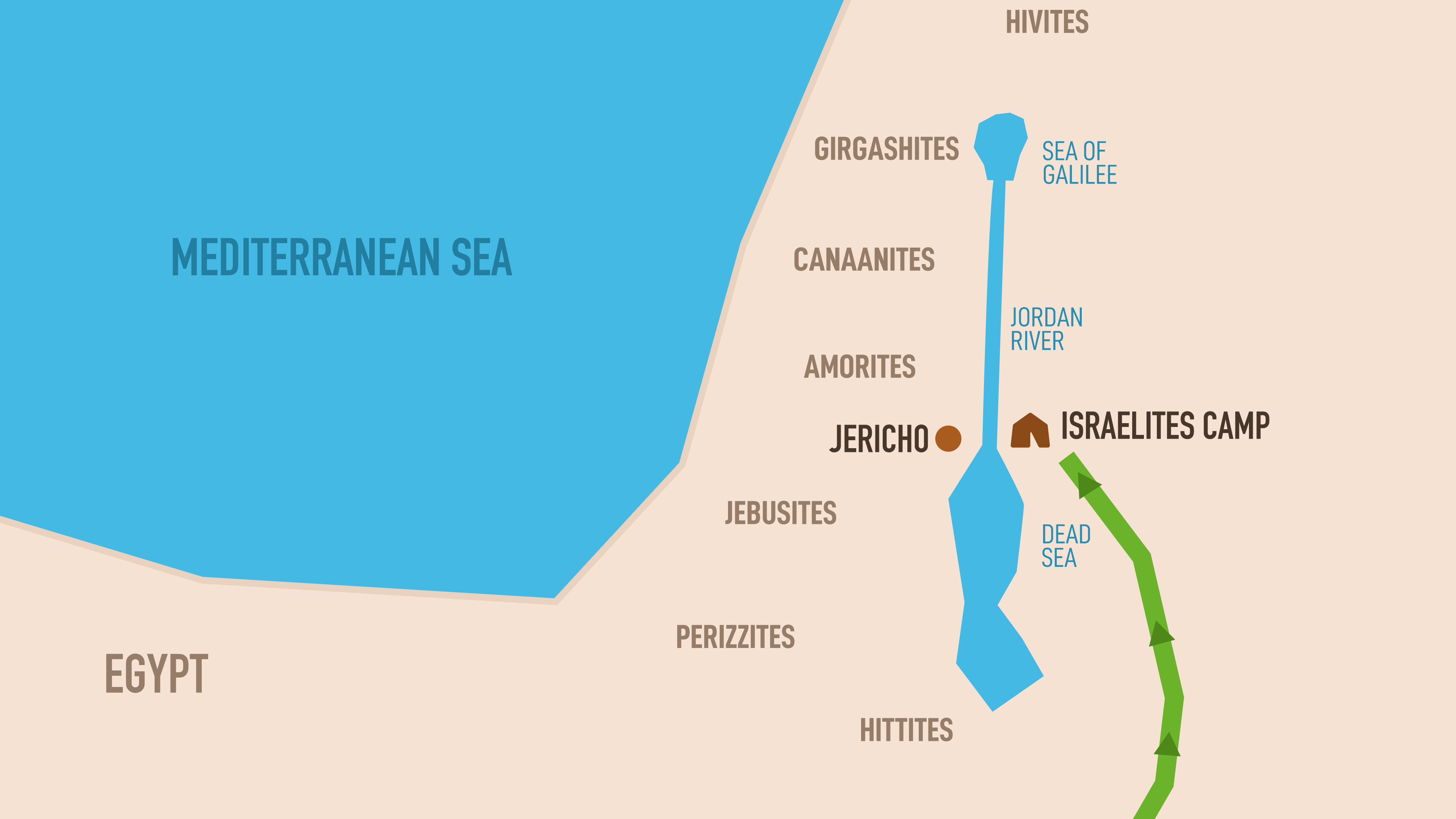
Chapter 6 begins, “Now Jericho …”. So the focus is now on the first big battle in Canaan, the capture of the city of Jericho. You might use a MAP to show them just where this city is: not far west of the Jordan River, inside the Holy Land. Any Old Testament Bible map will show you where Jericho is, or you can use a map like this I pulled off the internet:
Verse 1 goes on to say that Jericho was “tightly shut up,” no one went in and out — they’d already had spies once, so they were all “hunkered down” to repel the attack of Joshua & Israel.
God then gives Joshua His famous instructions, for all the men of war to circle the city, led by 7 priests carrying trumpets, once a day for 6 days, then on the 7th day to circle it 7 times, and the priests will blow the horns, and the people will shout — and the walls of Jericho would fall down, and they would take the city. Verse 11 tells us they circled the city this way the first day — and that brings us to our focus passage for this week, Joshua 6:12-25.
OUTLINE:
I. God’s Commands (:12-19)
II. The People’s Obedience (:20-21)
III. A Promise Kept (:22-25)
TEXT: Joshua 6:12-25
I. God’s Commands (:12-19)
:12 “Now Joshua rose early in the morning, and the priests took up the ark of the Lord. 13 The seven priests carrying the seven trumpets of rams’ horns before the ark of the Lord went on continually, and blew the trumpets; and the armed men went before them and the rear guard came after the ark of the Lord, while they continued to blow the trumpets. 14 Thus the second day they marched around the city once and returned to the camp; they did so for six days. 15 Then on the seventh day they rose early at the dawning of the day and marched around the city in the same manner seven times; only on that day they marched around the city seven times. 16 At the seventh time, when the priests blew the trumpets, Joshua said to the people, “Shout! For the Lord has given you the city. 17 The city shall be under the ban, it and all that is in it belongs to the Lord; only Rahab the harlot and all who are with her in the house shall live, because she hid the messengers whom we sent.
18 But as for you, only keep yourselves from the things under the ban, so that you do not [b]covet them and take some of the things under the ban, and make the camp of Israel accursed and bring trouble on it. 19 But all the silver and gold and articles of bronze and iron are holy to the Lord; they shall go into the treasury of the Lord.”
All these things Israel did in the first verses of this section, were things God commanded them to do in the first part of Chapter 6:
— march around the city
— the priests were to carry trumpets
— they were to circle the city once a day for 6 days,
— then 7 times on the 7th day
— then they were to shout
— the city was to be “under the ban” (This word in :17 and 18 is the Hebrew “cherem,” it means either to “devote” or “destroy” — either given to God, or destroyed — but either way it was not for them to have.)
— they were commanded NOT to take anything at all
— except the silver and gold were to go to Lord’s treasury for His house
So God gave them all these commands for how they were to approach the battle of Jericho.
???DISCUSSION QUESTION???
“Imagine that you were there when Joshua gave these instructions to Israel. Which of these might seem the hardest to understand, or difficult to do, for you?”
(To me the whole idea of marching around the city might’ve seemed odd — NOW of course we know why that happened — but they didn’t! I just wonder if I’d have thought, “What kind of plan is this?!”)
You all can share your own thoughts. (And if someone asks why they had to kill the people, we’ll look at that in the next section.)
??? To help APPLY this: you might ask another question: ??? “What are some commands God’s given US to do today?”
(Examples can include: The Great Commission to make disciples, to be baptized, to be holy, be generous, to forgive, to turn the other cheek, etc.)
It’s just as important that we are faithful in OUR obedience to these things today, as that it was for Israel to be faithful to God’s commands in Joshua’s day.
II. His People’s Obedience (:20-21)
:20 “So the people shouted, and priests blew the trumpets; and when the people heard the sound of the trumpet, the people shouted with a great shout and the wall fell down flat, so that the people went up into the city, every man straight ahead, and they took the city. 21 They utterly destroyed everything in the city, both man and woman, young and old, and ox and sheep and donkey, with the edge of the sword.”
“SO” — because of God’s commands through Joshua — the people did what was commanded: “The people shouted … the priests blew” — and when the walls miraculously fell down, they went in and took the city, and destroyed everything in it, just like God commanded.
It’s important to understand that as they moved forward in obedience, God did what only God can do: He made the walls of the city fall. The NASB says they “fell down flat” — the Hebrew is “tachath,” they fell “under, beneath, underneath, below.” The point is, the people of Israel did not do this; GOD did it. And He did it as His people obeyed Him and stepped out in faith.
Of course there are some who question whether this really happened; I read where one critic said there is no evidence of it archeologically. That is not true! There IS archeological evidence of both the city of Jericho, and of its destruction in antiquity — and perhaps at the very time indicated in the Bible!
In an article on researchgate.net, 15 June 2023, “The Bronze Age Destruction of Jericho, Titus Kennedy writes:
“The identification of Jericho with Tell es-Sultan is not disputed …” (In other words, this IS the ancient city of Jericho that they have found!) and he goes on to write: “Although there is a significant deviation in views over the exact date of the destruction and abandonment, archaeological analyses of Jericho generally agree on the manner in which the city met its end, including a widespread fire, collapsed mudbrick walls, burning of the stored grain, and abandonment.”
There is a map of the ruins of ancient Jericho included with this article, which your group may be interested in seeing if you can print/post it.
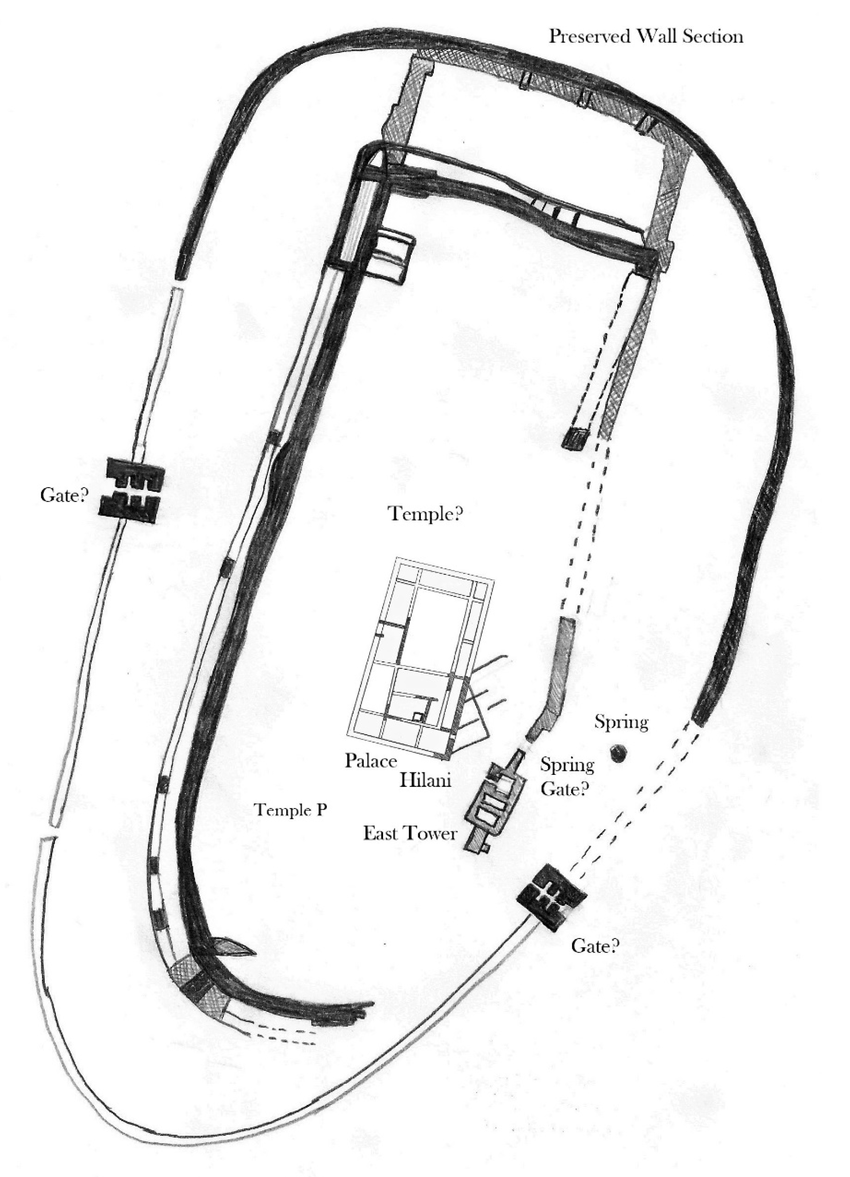
The telling point here is: THE STORY OF JERICHO IS NO “MYTH.” Skeptics are always calling Bible stories “myths,” but myths are made-up stories with no real historical foundation. This the REAL story, of a REAL people, who came to a REAL city, and it was REALLY destroyed — remember Kennedy’s article says Jericho was destroyed by fire, and if you read Joshua 6:24, it says “They burned the city with fire, and all that was in it.” This is exactly what the archeological dig at Tell-es Sultan tells us!
All of which should serve to strengthen our faith. Sometimes people talk about “blind faith.” Christianity takes faith, certainly; as I Peter 1 says, we haven’t “seen” Jesus, but we believe in Him. It takes faith. But the Christian faith is not “blind” faith. There is enough credible, historical, archeological evidence to show that you don’t have to cast your intellect aside to become a Christian and believe the Bible. There’s solid evidence that the accounts of scripture are absolutely true!
NOW: :21 says: “They utterly destroyed everything in the city, both man and woman, young and old, and ox and sheep and donkey, with the edge of the sword.”
Again, this is part of the obedience of Israel, which is the focus of this section. But this destruction of the inhabitants of Jericho (and many others throughout Canaan later) is troubling to many people. In fact this is something that many unbelievers use to criticize the Bible and its God: “How could a loving God command the death and destruction of all these people, even ‘young and old.’” That sounds like a really hard question, and even many Christian people have difficulty with it. Some in your group may wonder about this. So let’s talk about it. It may seem at first to be an “unanswerable question,” but it really isn’t.
When people criticize Joshua (and ultimately God!) for the destruction of the Canaanites, they pose the criticism from the standpoint of the people as being “innocent, harmless shepherds” or whatever, when that’s actually far from the case.
In Genesis 15:16, God told Abram that his descendants would be enslaved in Egypt for 400 years, and would then return to take the land, “FOR THE INIQUITY OF THE AMORITE IS NOT YET COMPLETE.” Those words are significant. God’s telling Abram that the Amorites are sinful people — but they’re not yet as totally perverse as they’re going to be! They will get progressively worse over the next 400 years — and then He will use His people to bring the judgment on them that they absolutely deserve.
The truth is, these were not “nice, innocent civilians.” They were wicked, perverted, and vile. We see something of what the people of the land were like in the story of Sodom and Gomorrah in Genesis — and that was 400 years earlier! God said they’d gotten progressively worse since then, and deserved to be destroyed.
Leviticus 18 describes them as a culture of sexual immorality, incest, homosexuality, and bestiality. They worshipped Molech by sacrificing their children on the outstretched arms of an idol as a roaring fire consumed them alive; they banged on loud drums to cover the screams of the children. As judgment for their sins, God instructed the Israelites in Leviticus 18:24-25:
“Do not defile yourselves by any of these things; for by all these the nations which I am casting out before you have become defiled. For the land has become defiled, therefore I have brought its punishment upon it, so the land has spewed out its inhabitants.”
These people were perverted and contaminated by generation after generation of incest, bestiality, and demon-possession and worship. Notice God commanded even the ANIMALS to be killed: “ox and sheep and donkey” (All the commands in Leviticus of all the perverted things NOT to do: these were the very things these people were doing! God said DO NOT BE LIKE THEM. This is why I am judging them, and casting them out of this land.
In :21 God said to destroy “ox and sheep and donkey” — even the animals had been defiled by the bestiality of these people, along with many other unspeakable things. Can you imagine the STDs (sexually transmitted diseases) that ran rampant in that society? The perversion, the demon-possession, that made these people less than what we think of today as human.
The point being, there were REASONS why God commanded them to do He did. And that’s really the bottom line here: we need to TRUST GOD. If He said this was a just thing to do, then it was. A key verse is Genesis 18:25, where Abraham said “Shall not the Judge of all the earth deal justly?” We KNOW God IS just; He DOES do justly. So we need to trust, that He who knows all, loves all, and is totally just, has judged rightly regarding these people. It all boils down to trusting God.
— IN ADDITION: don’t forget these people, as vile as they were, still had a chance to repent and turn to God! We just saw in Joshua 2:10-11 how Rahab said she’d heard about God, and how He delivered Israel, and she confessed Him as Lord, and ended up becoming a part of His people. All those Canaanites had heard the same things; they’d had the same opportunity, but they didn’t take it.
THE REALLY AMAZING THING here, is that there were these totally depraved, perverted, filthy, demon-possessed people — and yet: GOD SAVED THOSE AMONG THEM WHO REPENTED!
We shouldn’t wonder at God’s judgment on those who totally deserved it; we should stand in awe of His AMAZING GRACE!
Surely Rahab and her family are now standing in heaven, singing “Mercy there was great, and grace was free!” “Amazing grace, how sweet the sound, that saved a wretch like me!”
As we talked about before, this gives hope to every one of us, and to every one we know. There is no one whose sin the blood of Christ cannot cover, if they will repent and call on Him!
Encourage your group members to call on Him to save them if they have not already — and to keep praying for those they know who need to.
It’s just like the great hymn says: “To those who have sought Thee, Thou never saidst “no” — now wash me and I shall be whiter than snow”!
But to me the bottom line is that verse from Genesis: “Shall not the Judge of all the earth deal justly?” The answer, obviously, is that OF COURSE He will! God is never unjust. NO ONE WILL EVER SAY IN ETERNITY: “GOD DID NOT DEAL JUSTLY WITH ME.” He will absolutely just to everyone. (Sadly, of course, that justice will actually doom many, because they absolutely deserve God’s wrath!)
So we can trust that if God said those people needed to be destroyed, they needed to be destroyed. And that’s part of our faith. We have to trust God. Is He trustworthy? He absolutely is. So we can trust, whether we understand it all or not, that the right thing was done when Israel obeyed God here.
You might close this section with a
???DISCUSSION/APPLICATION QUESTION???
“Can you share a command in God’s word that you didn’t understand at first?” but obeyed (or maybe you didn’t at first!)
(Maybe they didn’t understand why they needed to be baptized, or tithe, or remain with their spouse, or exercise church discipline, or go somewhere, or give something.)
Make the point: like Israel at Jericho, we may not always understand WHY God commands us to do something; but it’s always important that we obey the commands God gives us.
III. A PROMISE KEPT (:22-25)
:22 “Joshua said to the two men who had spied out the land, “Go into the harlot’s house and bring the woman and all she has out of there, as you have sworn to her.” 23 So the young men who were spies went in and brought out Rahab and her father and her mother and her brothers and all she had; they also brought out all her relatives and placed them outside the camp of Israel.
24 They burned the city with fire, and all that was in it. Only the silver and gold, and articles of bronze and iron, they put into the treasury of the house of the Lord. 25 However, Rahab the harlot and her father’s household and all she had, Joshua spared; and she has lived in the midst of Israel to this day, for she hid the messengers whom Joshua sent to spy out Jericho.”
This is very similar to, and it could well be treated under “His People’s Obedience,” but I might focus on it separately as the special promise that was kept for Rahab.
Israel was very careful to fulfill the promise to her. Verse 22 says Joshua, Israel’s leader, who certainly had his hands full, specifically told the two men who’d scouted the land to go get Rahab and her family. Verse 23 says they got her, and her whole family who’d come to her, and they set them aside outside the camp. They were saved from the devastation of the city. Everyone else was killed, and everything in the city was burned. But Israel kept the promise to Rahab, and as :25 adds, “she has lived in the midst of Israel to this day.” As we know, she ended up marrying an Israelite, and is listed in the genealogy of Jesus the Messiah! Matthew 1:5 says: “To Salmon was born Boaz by Rahab.” And “Rahab” actually has a Greek definite article in front of it (which the other names in the genealogy don’t have), the article means “THE Rabah” — in other words, it was THIS Rahab, that everyone knows from Joshua, that it was referring to.
But to me it’s an amazing thought: WHO WAS SHE that she should get this special attention; that of all Jericho, only she and her family should live? Yes, she hid the spies, but she was a “nobody” to really deserve this. AND YET THEY WERE FAITHFUL TO KEEP THE PROMISE to her.
This is both a reflection of the faithfulness of God, and the way that we as His people should reflect His faithfulness to others.
God is faithful. He keeps His promises — even to US! WHO ARE WE that God would care about us, much less be concerned to keep His promises to us? Like Rahab, we are “nobodies.” But yet God is faithful:
— “He is faithful and just to forgive us our sins” (I John 1:9)
— “If we are faithless, He remains faithful” (II Timothy 2:13)
— “Let us hold fast the confession of our hope without wavering, for He who promised is faithful” (Hebrews 10:230
Amazing as it is, God will keep His promises to even US!
There’s an old song from the 1970’s that expresses the apt sense of amazement that we should have at God’s gracious care for us, it’s called “My Little World”:
“O God of the stars, the sun, and the moon,
O God of the wind and the seas;
Tho’ You’re everywhere, how amazing it is,
That You can be here with me.
The uncharted craters of planets far beyond,
You know like the palm of Your hand —
And yet You’re concerned with my little world,
O help me to understand.”
The second part of II Timothy 1:12 says “for I know whom I have believed and I am convinced that He is able to guard what I have entrusted to Him until that day.” We can safely entrust our eternal souls to God, because we’ve trusted His word, and God always keeps His promises.
But that’s not all: AS HIS PEOPLE — we should be diligent to keep our promises to others too — like Joshua and Israel did here.
??? APPLICATION QUESTION???
Your group doesn’t need to answer this out loud, but have them ponder:
“Is there anything I promised (or even told) someone that I would do — that I have not followed through on?”
The Lord might speak to someone in your class today — maybe even you! — that you have some “unfinished business” that you need to take care of, a promise to keep, so that your life and words are good reflection of our God, who always keeps His word. Joshua and His people reflected their Lord well here in Joshua 6, and we should seek to do the same thing ourselves.
(Sadly, next time we’re going to see what happened when Israel did NOT obey God like He commanded them. Hope you’ll join us next week for that overview!)
___________________________________________
— Remember there is now a “PRINT” button at the end of the lesson on my blog, that you can hit to print out the lesson in its entirety.
— If you’ll type your email address in the “follow blog via email” blank on my blog home page, WordPress will automatically send you next week’s lesson and you won’t have to search for it each week.
— And if you write something in the Comments on my blog or YouTube, my commitment is to pray for your and your group and any special request you make, by name this week.
Per my licensing agreement with Lifeway:
— These weekly lessons are based on content from Explore the Bible Adult Resources. The presentation is my own and has not been reviewed by Lifeway.
— Lifeway resources are available at: goExploretheBible.com and: goexplorethebible.com/adults-training
— If you have questions about Explore the Bible resources you may send emails to explorethebible@lifeway.com


Your comments have helped me tremendously in explaining
I’m so grateful to hear that, Don. Thank you for letting me know. I’m praying for you this weekend!
Will you tell me, please, which translation of the Bible you use? This week I am researching the various wordings in Joshua 6:1 about the fortification of the city.
Thank you
Yes ma’am; I use the New American Standard Bible (NASB) usually the 1995 version. Praying for you as you finish your prep and share tomorrow!
Thank you for your response. I love your perspectives on the Lifeway curriculum and appreciate the time you spend in preparation for our use. I incorporate your thoughts frequently in my lesson plans.
Thanks again!’
I’m so grateful that the overview is helpful to you, Nora! Thank you for taking the time to let me know. I was praying for you last Saturday and Sunday!