During the first years of Lyndon Johnson, before he became entangled in the Vietnam controversy, he was one of the most powerful presidents in U.S. History. Robert Caro outlines in his masterful 5 volume biography just how LBJ (as he became known) got things done, especially in the U.S. Senate and : he was master deal-maker, he was a manipulator, he could use flattery when he had to; he was an arm twister — and he would threaten. He used what became known as “The Johnson treatment”: he would lean his massive 6 foot 4 frame over you and intimidate you into voting his way. Here’s a picture someone took of him using “The Johnson Treatment” in a real-life situation:
Last year, Cheryl & I visited the LBJ museum in Austin, and she got this picture of me getting “The Johnson Treatment”!
LBJ was perhaps the greatest ever at “getting things done” in Washington. Robert Caro called him “The Master of the Senate.” So should we all study men like Lyndon Johnson to learn how to get things done? Not if you’re a follower of Jesus. Because Jesus said, I have a different way I want My followers to get things done. And we see what that way is, in our passage today in James 4:1-3
An overview for Sunday School teachers and Bible study leaders, of Lifeway’s “Explore the Bible” lesson of Acts 27:31-44, for Sunday, November 24, 2024, with the title, “Trust.” A video version of this overview is available on YouTube at:
INTRO: Ask your group to share: ??? What was the worst storm you have ever been through: hurricane/tornado/thunderstorm/blizzard? — and what was it like for you?
(You might also ask if anyone has ever been on a boat/ship during a storm …)
For example: Cheryl & I have hunkered down through a couple of hurricanes in Louisiana and Texas. The last one was Hurricane Beryl this July. It was “only a 1” but it was a direct hit; our area was right in the eyewall. At one point I was standing in front of the big window in front of our kitchen table, watching the wind whip the big pine tree right in front of that window, back & forth. I was like, “Hang in there baby!” I did not want that thing crashing in on our house — and thankfully it didn’t. But there were some anxious hours there, and we lost power for a couple of days and had quite a bit of cleanup, as did a lot of our folks.
After everyone has shared about storms they’ve been through, then you can say: In today’s lesson in Acts 27, the Apostle Paul is a prisoner on his way to trial in Rome on a ship, when they get caught in an extremely violent storm on the Mediterranean Sea. But we will see in our focus passage today, that the Lord not only brought Paul through the storm, but also used him to witness and minister to the others who were traveling with him.
CONTEXT:
We will conclude our study of the Book of Acts today with this lesson from Acts 27. As you know, basically the second half of the Book of Acts deals with the three mission trips of the Apostle Paul, and then his arrest and imprisonment. Last time we saw in Acts 26 how he shared his testimony with King Agrippa and others, before he was taken to Rome for trial.
As we pick it up today in Chapter 27, Paul is now on his way to Rome because he has appealed to Caesar. Verse 1 says they set sail for Italy. This is a LONG journey from Palestine to Rome. I have often read Acts 27 about all the stops they made, and wondered, WHY was it taking them so long?
Of course, for one, these were ancient times and they had to rely totally upon fair winds to drive their sails — there was no engine power. And it was winter, and there were some bad storms.
But secondly, this is a HUGE journey in length. I had never really realized just how lengthy a journey this was, until I saw this MAP of the relative size of the Mediterranean Sea, compared to the United States. I just had NO IDEA the Mediterranean Sea this big. I think it might be helpful to your class’ understanding as we cover the passage today, to see just how long and arduous a trip this was that they were making:
As you can see, the Mediterranean Sea is virtually the width of the entire United States — it would stretch from North Carolina to California! I had previously imagined it as being maybe only about 1/4 of that size. So this gives us a good idea of just how far they were sailing on this trip: basically as far as from the U.S. Atlantic coast, all the way to Montana — in ancient sailing ships, and with a lot of storms and difficulties along the way.
And that is what they encountered. Verse 14 says “a violent wind, called ‘Euraquilo’ (Euro (east) Klydon (storm) so a “Northeaster”) rushed upon them and drove them off course. In :18 they start throwing everything overboard, and :20 says “all hope of our being saved was gradually abandoned.” (Do you notice the “we” again in this verse? Luke is evidently still with Paul here, and he is writing about what he experienced with him on this trip.)
So this is a hopeless situation from a human standpoint. Nobody thinks they are going to survive — nobody except Paul. He says in :23 that an angel of the Lord spoke to him, and told him that he would indeed stand before Caesar — AND that “God has granted you all those who are sailing with you.” Verse 30 says the sailors let down the ship’s little boat into the sea, hoping to escape by themselves — and that brings us to our focus passage for today, Acts 27:31-44.
I am not much of a “tree expert” at all. I know some people can just look at a tree and say, “Oh that’s a such-and-such tree …” but I have never been able to do that. I could probably identify about 3 kinds of trees; a weeping willow, a Japanese maple, and maybe an oak tree. But there IS another kind of tree I can pick out pretty well: and that is a tree that has fruit on it! Once Cheryl & I were driving to Disney World and as we were heading south down the interstate towards Orlando, all the sudden I shouted out “Orange trees!” There was a whole orchard of orange trees just off the right side of the highway. How did I know that? I didn’t pick out the shape of the leaves, or the smoothness of the bark, or anything like that: it was the fruit that gave it away. I saw these big orange circles hanging off the leaves, and it was obvious even to a novice like me, from hundreds of feet away, that those were orange trees! You could tell the tree, by its fruit.
And that’s what Jesus tells us in Matthew 7:16 isn’t it: “You will know them by their fruits”? He went on to say (:17) “Every good tree bears good fruit, but the bad tree bears bad fruit … (:20) so then, you will know them by their fruits.” THEN He added in :21, “Not everyone who SAYS to Me, ‘Lord, Lord,’ will enter the Kingdom of Heaven, but he who DOES the will of My Father who is in heaven.” Jesus said, if you really belong to Him, you won’t just SAY it; you will also SHOW it with the fruit of your life — and this is just what we’ve been seeing in James 2 and 3;
— In Chapter 2 James said if you really have faith in Jesus, you’ll have some works in your life that back up that claim. And he gave 5 examples of that, including a practical example, caring for a fellow church member, the demons, Abraham, and Rahab from the Old Testament. — Then the week before Cheryl’s stroke we saw in 3:1-12 this same theme continued, only now in the context of our words. He started off with the principle that if our faith is real, it will affect the way we talk, then again he gave 5 examples of that: the horse’s bit, the rudder, and the fire, and then the tamed animals and the spring of water. So he said again: if your faith is real, you’ll show it with fruit from your life — and one of those “fruits” will be the way you speak. The way you talk should show you are a Christian. — So now this morning as we come to James 3:13-18, James continues this theme of how faith, if it is real, will have some works to validate it; and like Jesus he uses the word “fruits” — that confirm that it’s real. Let’s look at what this passage tells us about “The Fruits of Righteousness;” things that will be present in our lives if we really know the Lord:
An overview for Sunday School teachers and Bible study leaders, of Lifeway’s “Explore the Bible” lesson of Acts 26:19-19, with the title, “Respond,” for Sunday, November 17, 2024. A video version of this overview is available on YouTube at:
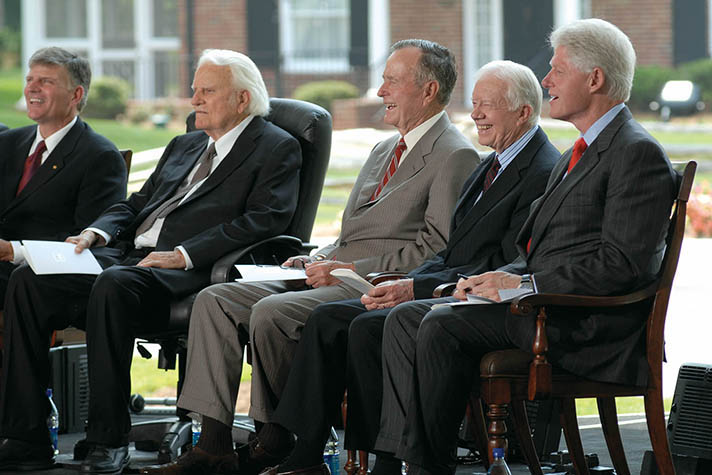
INTRO: Evangelist Billy Graham was called the “pastor to presidents.” He met with every U.S. President, from Harry Truman in the 1940s, to Donald Trump in 2016. When he met with them, Graham always sought to share the gospel with these most powerful men in the world. He is an example of one who “spoke truth to power” — which can be a very difficult thing to do!
After sharing that introduction, you could ask your class: ??? Has anyone here ever have the opportunity to “speak truth to power” — or know someone who did?
In our lesson for today from Acts 26, the Apostle Paul “speaks truth to power,” and shares the Gospel with some rulers and kings.
An overview for Sunday School teachers and Bible study leaders, of Lifeway’s “Explore the Bible” lesson of Acts 22:6-21, with the title of “Witness” for Sunday, Nov. 10, 2024. A video version of this overview is available on YouTube at:
INTRO: ??? Has anyone in our class ever been called to testify as a witness in a trial??? Then you could say: today in Acts 22 we are going to see how the Apostle Paul testified to his faith before the Jews …
OR: ??? Has the Lord given anyone an opportunity to share a witness with someone recently??? You/your group can share your experiences, then you can say, this morning in Acts 22 we see how Paul took advantage of an opportunity to share the gospel, in the midst of a very difficult situation. (Or even if none of you can share a recent opportunity, you could say: We probably DID have some opportunities, but missed them! But here in our passage in Acts 22 this week, we see how the Apostle Paul did take an opportunity to share, even in a difficult situation.)
(Testimony shared 10/27/24; the Sunday Cheryl & I first returned to church after her stroke)
August 31, 2024 is a day that Cheryl & I will never forget. It’s the day when after a week of Cheryl having unusual physical difficulties, going to the doctor, getting medication, watching things get progressively worse until she couldn’t stand or walk to the bathroom, that we finally went to the emergency room and discovered to our shock and dismay that she was in the process of an ongoing and devastating stroke. This totally upended our lives. Cheryl was left with what the hospital doctor called “severe damage,” unable to move anything on her left side, her arm or leg. We are here to tell you today, the last two months has been a dark, dark valley for us.
But we are also here to tell you that in the dark valleys — God is with us! He HAS been with us. A couple of years ago I learned that in the exact middle of Psalm 23 — a significant place for the Hebrews — is the phrase “for You are with me.” God inspired David to put that phrase right in the middle of that great Psalm, to show us that THIS is what it’s all about; THIS is our hope; THIS is our comfort in “the valley of the shadow of death,” and “in the presence of our enemies” — what is it? “For YOU are with me.” That’s our hope, that’s our comfort — that God is with us. And we are here to tell you today that He IS. In the darkest valleys of your life — and we’ve been in a dark one — God is with us.
He’s been with us, and He’s been walking with us, doing His work in us, and He’s been teaching us. And so this first Sunday back with you, I felt led to just share with you a testimony of some of the things we’ve learned and experienced these past weeks. They’ve been costly lessons for us, but they’ve been good ones. I hope you can learn from some of them today:
An overview for Sunday School teachers and Bible study leaders, of Lifeway’s Explore the Bible lesson of Acts 20:18-32, with the title “Commit,” for Sunday, Nov. 3, 2024. A video version of this overview is available on YouTube at:
INTRO: You could use one of the two following suggestions for an introduction to the lesson:
— George Washington’s farewell dinner with his officers, December 4, 1783. It’s a bit long, but it’s very touching. You might share all or part of, or summarize it for your class: “At Fraunces Tavern the invitees milled about awaiting Washington’s direction. … With glass raised, Washington waited until all had filled their own. ‘With a heart filled with love and gratitude,’ he began in a choked voice, ‘I now take leave of you. I most devoutly wish that your later days may be as prosperous and happy as your former ones have been glorious and honorable.’ … Blinded by tears, his voice still faltering, Washington resumed, ‘I cannot come to each of you, but shall feel obliged if each of you will come and take me by the hand.’ As the senior office present, Henry Knox stepped forward silently and proffered his large cannoneer’s fist. Weeping openly, Washington embraced his burly longtime chief of artillery and kissed him…. In turn, and by rank, each officer, Van Steuben following, came forward to be clasped, ‘suffused with tears,’ and unable to utter an intelligible word. ‘Such a scene of sorrow and weeping, ‘Tallmadge recalled, ‘I had never before witnessed. … tears of deep sensibility filled every eye … The simple thought that we were about to part from the man who had conducted us through a long and bloody war, and under whose conduct the glory and independence of our country had been achieved, and that we should see his face no more in this world seemed unsupportable.’ The General’s parting band of brothers seemed like ‘grieving children.’ Each realized that they had all lived through something that would not be replicated in their lives, and that in the 1,600 mile length of the vast new nation, distance and time made it wholly impossible that they would share another such moment. Once the most junior office had received Washington’s embrace, and men never known for tears were still dabbing at their eyes, he strode across the Long Room. With what seemed like a strenuous effort, he raised his right arm in a silent farewell and walked out the door without looking back … most officers followed, Tallmadge remembered, ‘in mournful silence.’ … No one would return for Samuel Fraunces’ carefully laid out collation of cold meats for which Washington had paid the bill in advance.” (Stanley Weintraub, General Washington’s Christmas Farewell, pp. 85-87)
— OR: Have your class members to write (or just share): “If you were going to leave your family/loved ones a last message, what would you tell them?” Write down 2-3 things, and we’ll ask for some volunteers to share in a couple of minutes.
Whichever introduction you use, then say: in our lesson this morning we’ll look at the last words the Apostle Paul shared with the leaders of the church at Ephesus when he left them for the last time.
An overview for Sunday School teachers and Bible study leaders, of Lifeway’s “Explore the Bible” lesson of Acts 19:11-20, with the title “Motives,” for Sunday, October 27, 2024. A video version of this overview is available on YouTube at:
INTRO: Last week we suggested to open the lesson by asking your group for the most sinful/worldliest place they’d even been. This week you could ask your class what is the biggest city you’ve ever visited?
(Some might say New York, or Chicago, or London — I’ve been on mission trips to New York, Istanbul, and Delhi, India — HUGE cities: Delhi has almost 30 million population!)
This week we see how the Apostle Paul went to one of the largest cities in the Roman Empire, the city of Ephesus, on his 3rd Mission Trip.
On Saturday, August 31, my wife Cheryl suffered a massive stroke that crippled her left side, leaving her at least temporarily unable to use her left arm or leg. This was totally unexpected, and was devastating to us. As with every difficulty, it drove us anew to rely on the Lord and His word. But even in the midst of the stroke and its related problems, we found a lot of humor along the way, that helped us keep our sanity — or maybe you should be the judge of that!
An overview for Sunday School teachers and Bible study leaders, of Lifeway’s “Explore the Bible” lesson of Acts 18:1-11, 18-21 for Sunday, October 20, 2024, with the title, “Together.” A video version of this overview is available on YouTube at:
INTRO: Ask your group: ??? What’s the most “worldly”/sinful city you have ever visited???
(You/your class members can share your experiences. For example: when I was in college a group of us went to Paris on mission; and although it is called “The City of Lights,” it was a very dark place spiritually. Later as a pastor I also attended the Southern Baptist Convention when it was held in Las Vegas. I definitely saw some things there that I have never seen before! These are very worldly places.)
So after you/your group share your experiences like that, and some of the things you saw, then you could say something like: in our lesson for today we see how the Apostle Paul came to a very worldly place to minister, the city of Corinth, Greece!
I'm a retired Southern Baptist pastor of almost 40 years. My wife Cheryl & I moved to Norman, OK in March of 2025. I share a weekly overview for Sunday School teachers of the weekly Lifeway "Explore the Bible" lesson, as well as texts of my sermons and other articles.



 shawnethomas