It’s almost hard to remember last February’s winter storm now, in the heat of the summer — but I may need to remind SOME of you that you DID say you would never gripe about the Texas heat again, after that big winter freeze! Just holding you accountable!
But one of the things Cheryl remembers about that February storm is when the electricity went out, and there was NO light in the house. She got up for just a minute, and tried to feel her way around without any light, and she said it was SO dark, it was disorienting; she said you couldn’t see a thing. It was creepy. It was absolute, total darkness. Thankfully we had some emergency lights, and when we turned those lights on, what a difference it made!
And what a picture of our world today. Our world is dark with sin. But God sent us His light in the Person of Jesus Christ. Jesus said “I am the light of the world.” But then He turned to His disciples in the Sermon on the Mount in Matthew 5 and said, “YOU are the light of the world.” With HIS light, shining in and through us, we are to be lights in the world, making a difference in our dark world. That’s what we see in our passage for today, where Paul wrote about “this crooked and perverse generation, among whom you appear as lights in the world, holding fast the word of life.” He said you (Christian person, Christian church) are like “lights.” This world is dark and crooked and perverse, but you are to be different. You are to be “Lights In The World.”
This is a nice golf glove. But it is very limited. It really can’t do much by itself, can it? It can’t swing a club. Really, it can’t do anything, can it?!
But this glove belongs to somebody. It belongs to Jack Franklin. (Come on up Jack, and put this glove on!) When Jack puts his hand in this glove, it can do all kinds of things on the golf course. I’ve seen him hit some great shots. In fact: “How many holes-in-one have you hit, Jack?” (TWO!)
See, this glove can do some amazing things, with the hand inside the glove!
And that’s a great picture of how it is with us and God. Without God inside of us, you and I are just like the “empty glove.” Jesus said in John 15, “without Me, you can do NOTHING”! We’re like the glove without the hand in it; powerless; ineffective. But when we give our life to Jesus as our Lord & Savior, He sends His Holy Spirit inside of us, Who totally revolutionizes our lives. So now, WITH Him inside of us, we “can do all things through Christ who strengthens us” — like Philippians 4:13 says.
So I want us to look for a few minutes this morning from Philippians 2:12-15 about “The Hand Inside the Glove” — God working in us, giving us the desire and the power to do His will.
There are some things that human words and media, just do not have the ability to fully convey. For example, our secretary Dana just visited Niagara Falls with her husband. She said so it was just so incredible. I’ve never been, but I assume that like the Grand Canyon it’s indescribable — several of us were talking at church the other day about visiting the Grand Canyon, and one of the things we talked about is how you just can’t “capture” it — you just stand there in total amazement and awe, and you pick up your camera and try to get a shot of it — but no picture you can take even comes close to the reality of what you are seeing. You can can’t capture the full glory of that live experience in any photograph.
That is somewhat the way I feel as we come to our passage for today from Philippians 2. This may be the most powerful and glorious set of scriptures in all the Bible, as it describes who Jesus is, and what He did for us. But human words are not adequate to expound it; certainly mine aren’t. I think of the old hymn that speaks of “this poor lisping, stammering tongue” — and that’s the way you feel when you try to convey the unconveyable. But we’ve got to at least try to get a better understanding about what Jesus did for us. So let’s look at this classic passage for a few minutes, which describes the Condescension of Jesus, and the Glory it brought Him — which is our model as we follow Him.
Birch Bayh was a Senator from Indiana back in the 1960’s. He and his wife Marvella ended up serving in Washington for some years, but they were admittedly “babes at sea” when they first arrived from Indiana. They were nervous about all the protocol, especially at important Washington political dinners. Marvella said that Lady Bird Johnson told her: “Just keep an eye on your hostess, and follow her lead.” And so she got along very well, just imitating the leader at all these functions.
But one day her husband Birch came home from a luncheon with the President and some other top dignitaries, and said he was totally confused. He said “You told me to watch the leader, right?” She said, ’That’s right.” He said, well, “I was seated between the Chief of Protocol and the President of the United States.” When we came to the first course, one of them picked up his fork, and the other one picked up his spoon!” Who was he supposed to imitate? (Katharine Graham’s Washington, pp. 92-93) (Of course, the President was LBJ, so he ‘d have probably been better off “protocol-wise” following the other guy!!)
But it matters who you imitate — which is what our verse for today is about. My original plan for today was to preach on Philippians 2:5-11 today, on the glory and humiliation of Christ. But as I began to study Monday, I couldn’t get past verse 5:
“Have this attitude in yourselves which was also in Christ Jesus.”
During the American War for Independence, General George Washington was irked by what some of the drummers in the army were doing. Each drummer would just drum in his own way, (and sometimes “out of the blue” just to show off their own ability) and it was sending out mixed signals to the army. So Washington sent this order out: “The use of drums are as signals to the army — and if every drummer is allowed to beat at his pleasure, the intention is entirely destroy[e]d, as it will be impossible to distinguish whether they are beating for their own pleasure or for a signal to the troops.’” (Chernow, Washington, p. 293)
Washington was telling those drummers: Listen, if we are going to be a successful army, you can’t just drum whatever or whenever you want to; We have to sacrifice our own preferences and send out unified signals if we are going to stand firm together as an army, and win this war.
Before our Grand Opening last week, we finished Chapter 1 of the Book of Philippians, where Paul told us as a church, that we need to STAND FIRM against the contrary “currents” of our society and the spiritual enemy who wants to undermine us. Now he follows this up in Chapter 2 with a specific challenge on what it takes for us to actually DO that. We need to realize that whether or not we obey what Paul shows us in these 4 verses today WILL BE A KEY as TO WHETHER WE WILL SUCCED OR FAIL ON OUR MISSION AS A CHURCH IN THIS NEW LOCATION. So we need to look carefully at what he tells us here:
“Therefore if there is any encouragement in Christ, if there is any consolation of love, if there is any fellowship of the Spirit, if any affection and compassion,
Make my joy complete by being of the same mind, maintaining the same love, united in spirit, intent on one purpose.
Do nothing from selfishness or empty conceit, but with humility of mind regard one another as more important than yourselves;
Do not merely look out for your own personal interests, but also for the interests of others.
(Have this attitude in yourselves which was also in Christ Jesus …)”
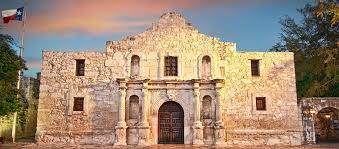
I can still remember walking through downtown San Antonio on my way to my first Southern Baptist Convention there, when all of the sudden, on my left, I saw this building, made of big, blondish white stones — and suddenly it dawned on me: this was the Alamo! It’s always been so ironic to me that the Alamo isn’t out in the prairie somewhere, but it’s right smack in the middle of the city in San Antonio!
But those stones there mean something, don’t they — to all Americans, and especially to Texans. That’s where William B. Travis, James Bowie, Davey Crockett, and scores of others gave their lives in March of 1836 fighting for Texas independence. “Remember the Alamo” became the battle cry for the new Texas Republic. The Alamo is one of the most famous historical spots in the United States, as we remember the courage, and the commitment to lay down your life for what you believe in, that it represents. We will remember what those stones at the Alamo mean!
In Joshua 4, God/s people were on their way into the Promised Land, after all those years of wilderness wandering. The Jordan River was at flood stage, so how were they all going to cross it? God miraculously stopped up the river the moment the feet of the priests hit the water, and Israel marched right in. And God told them to do something special on the way: He told them to take 12 stones out of the middle of that Jordan River bed, and take them into the Promised Land along with them. They camped at Gilgal, east of Jericho, and they set those 12 stones up. And Joshua said in 4:21 “When your children ask their fathers in time to come, saying, ‘What so these stones mean?’, then you shall inform your children, saying, ‘Israel crossed this Jordan on dry ground.’ For the Lord your God dried up the waters of the Jordan before you until you had crossed … THAT all the peoples of the earth may know that the hand of the LORD is mighty …”.
What did those stones mean? They meant that God had done a great work in their midst — and those stones were there to make sure they did not forget it.
Well today we have some stones too, don’t we? These beautiful blonde stones that adorn our new facility. Someone driving by Anchor Road or some of the thousands of cars that travel Highway 288 every day might look over here and ask this very same question of OUR building: “What do THESE stones mean?”
A very interesting fact: the stones that adorn this building are REAL stones, called “Santa Fe Chop,” and they were actually quarried here in Texas — of all places — just north of the Alamo! Well just like like the stones at Alamo; just like the stones from the Jordan River, the stones of this building are not here accidentally. “What do these stones mean” for us?
I. These stones mean that God had a purpose.
When God commanded the people of Israel to take 12 stones out of the Jordan River that day, He had a purpose in it: to remind the people of the miracle He had performed that day, when He dried up the Jordan River during flood stage, and led Israel into the Promised Land. Those stones set up at Gilgal had their purpose in the plan of God.
And we need to remember the same thing is true of THESE stones in our building today. They remind us that GOD had a plan and purpose for this place.
It would be easy for a well-meaning person say something like, “This all began with Bro. Rodney in 2004” or something like that. But that would miss the most vital element. (As Rodney mentioned a moment ago.) Everything begins with God. Everything always begins with God. The scripture opens with those crucial words: “In the beginning, God …”. It is ALWAYS “in the beginning, God …” And so it is to this day. It is always “In the beginning, God.” GOD is always the initiator; we are responders to Him, and to His plans and purposes.
Joshua said in :23 that those stones meant that “The Lord your God dried up the waters.” “These stones” in Israel’s day were GOD’S work. And we need to know that “our stones” here today are God’s work too.
We need to recognize that it is God’s plan and purpose that we are living out here — and the fact that it is GOD’S plan is both a great privilege and a great responsibility:
— What a privilege it is for us: to be a part of something that GOD HIMSELF is doing in our world — in our town. And God HAS been working, hasn’t He? We’ve had so many guests; we’ve seen people join the church almost every week, we have baptized several — GOD is at work. It is a privilege to be a part of that!
— But that we are involved in God’s work is also a great responsibility. This is not just OUR work, to do with whatever we want — it is GOD’S!
As we talked about last week, God did not plant us here as a church to just “drift” along with the times; He strategically placed us here to “stand firm” in the faith:
— that the Bible is the inspired word of God
— that in the beginning, GOD created the heavens and the earth, and made us male and female
— and that Jesus Christ’s death on the cross is the only way to heaven
We are not here to drift aimlessly; we are here to stand on God’s word and to fulfill to GOD’S purposes for us. Theses stones mean that God has a plan and a purpose — which is both a great privilege, and a great responsibility for us!
II. Theses stones mean there was a leader with vision:
God has plans, and in HIs plans, He uses men. God used Moses to lead Israel out of Egypt, and up to the brink of the Promised Land. The work of the Exodus was the work of God — but God used a man to share His vision with the people, and to bring it to pass.
And the same thing happened here, didn’t it? God, who had a plan and a purpose for First Baptist Church, communicated that vision to Rodney Bowman, the pastor of this church, back in 2004. I want to tell you, church, that I respect Bro. Rodney greatly for letting God use him to share this vision: that took faith; that took courage; that took perseverance on his part.
Many men who share a vision are not followed or appreciated. When Thomas Edison came up with the light bulb, many said “That’s great — but how are you going to get electricity to all of the homes to light all those bulbs? There will be this wild, unleashed electricity everywhere burning down homes and eloctrocuting people!” Many were skeptical of Edison’s vision.
It takes courage to set forth a bold vision. (It helps when you know it is from God, which I know Rodney would affirm!). But I’ll just tell you, as a pastor, I really appreciate the courage, and the boldness, and the perseverance that Rodney Bowman showed in setting forth this vision for First Baptist Angleton. And I say that partially that because I know that “faith,” or “vision” is NOT my greatest gift. But God places His men where He wants them to be for His particular times. God appointed Bro. Rodney to be here to share that vision — and I know he must be SO gratified today to see that vision fulfilled here “in these stones”! It’s a great privilege to see a vision come to pass! Moses didn’t get to see the Promised Land. Rodney’s here today sitting in it! — at least as far as “God’s Vision In Action” is concerned! You’re sitting in the fulfilled vision!
But I just want to affirm: God used you, Brother — and we are grateful for you, aren’t we, church? These stones mean there was a leader with a vision.
III. These stones mean there is a people who follow.
Moses and Joshua led the people of Israel, and the people followed. Their obedience was not perfect, as we know, but they did follow them out of Egypt and to the Promised Land. And Joshua didn’t cross the Jordan alone. He did it with the people of God who followed His leadership.
And the same thing is true here at First Baptist, Angleton. One of God’s great blessings to this church is a people with a heart to follow. I wasn’t here for the whole history of this project of “God’s Vision In Action,” but I know that the people here followed it by adopting this vision; they followed by giving to support it; and they followed by voting to make that move.
I’ll never forget how this people followed the very first night I was called to pastor this church. On Sunday morning I was voted in as the new pastor of First Baptist Angleton — and THAT SAME Sunday night we met with a presentation to move forward with this building. (I’ll tell you now, that was just a tad challenging for a guy whose gift is not faith or vision!) — but I loved the spirit of the people who follow!
First Baptist Angleton, thank you for being a people who follow. You followed as we made the final decisions on the building; you followed when we made the big decision to move ahead with the financing; you followed as we began the transition — and you followed as we made the move, with our first meeting here on Sunday, November 22, 2020 — in the midst of an international pandemic — you followed!
And you have continued to follow:
— You followed as we prayer walked “Every Street/Every Home” in Angleton in March, so that we can look any person we meet in this town in the eye and say: “Our church has prayed for YOU; for YOUR home, for YOUR family!” And we sowed seeds in prayer in March that will impact this town for years to come.
— You followed in our first “neighborhood outreach” to 3 neighborhoods around the church — and then to took dozens of meals to your neighbors and prospects and the elderly and the homebound as well.
God says in Judges 5:2, Oh that the leaders led in Israel — and that the people volunteered! THAT is a blessing from God: to have a people who follow. I am blessed to be your pastor!
That these stones are here right now, means there is a people who follow. Had there not been a people who followed, these stones would not be here today!
IV. These stones mean there is a church here with a MISSION!
Today is a great day for the First Baptist Church of Angleton — but this isn’t the “end” of the story. This is just the beginning!
God’s plan for First Baptist Angleton is not just to “build a building.” This building is here for a PURPOSE: to be used for His mission: to “worship God, and serve Him by reaching, teaching, and caring for people” from this strategic location, that HE might be glorified here. We’ve just started to do that! And Lord willing we’ll continue to do it until Jesus comes.
At the end of Joshua 24, Joshua says that “these stones” were there “THAT” — that’s the “purpose clause”; the “WHY” of all this — “THAT all the peoples of the earth may know that the hand of of the LORD is mighty, SO THAT you may fear the LORD your God forever.” Joshua said THAT is why “these stones” are here; THAT people may know and follow our God.
And that is why THESE stones are here at 972 Anchor Road today too. So that people may know and follow the God of the Bible; the God and Father of the Lord Jesus Christ. Psalm 67 says “God be gracious to us, and bless us, and cause His face to shine upon us — (WHY?) It says: “THAT Thy way may be known on the earth; Your salvation among all nations …”. We are here to proclaim His salvation: that although all of us have sinned and separated ourselves from God, Jesus died on the cross to pay for our sins, and whoever will repent and follow Him as their Lord & Savior will be saved. Our purpose is to share that message. These stones are here so that we might proclaim the gospel of Jesus here in Angleton, and through missions, to the ends of the earth.
CONCLUSION:
Just as someone walking down Alamo Street in San Antonio might ask, “What do these stones mean?” So someone — maybe today, maybe this week — will look at THESE blonde Texas stones, sitting here at the corner of Anchor Road and Highway 288 and ask “What do these stones mean?”
When they do, we need to remember:
— We need to remember they mean there is a God who has a purpose
— We need to remember they mean there was a leader who had a vision
— We need to remember they mean there was a people who followed
— and we need to remember they mean that we are here as a church to carry out a mission, stand on God’s word, and to proclaim the gospel of God’s salvation, until Jesus comes!
THAT is what “these stones” mean!
INVITATION:
— maybe you’re hearing us talk about the Gospel, but YOU’ve never given your life to Christ. You need to do that right now.
— Or maybe you need to be baptized following a previous profession of faith in Christ.
— maybe you need a church home — what a great day to join us here on mission at First Baptist Angleton!
— maybe you’ve been tempted to just sit comfortably here in this nice, new place, and God’s saying to you, NO! We are here to serve, and that’s what I want YOU to do
— maybe you are one who has been giving to “God’s Vision in Action” — or maybe you never have, and today you need to take one of those envelopes from the pew and begin helping with “our church family’s house payment” or give a special gift.
There are lots of ways we can respond today, but MOST ESPECIALLY if you are receiving Christ as your Lord & Savior today, and need to be baptized, some and share that with me right now …
In 1778, during the American Revolution, John Adams of Massachusetts was needed by his young country as an ambassador in Europe. His 10-year-old son Johnny (John Quincy Adams) would accompany his father on the trip. It was an amazing opportunity for such a young man, but, as you might imagine, his mother Abigail was concerned. Just after he left, she wrote him a long letter which he would receive when he arrived. In it, she encouraged her young son:
“Improve your understanding for acquiring useful knowledge and virtue, such as will render you an ornament to society, an honor to your country, and a blessing to your parents … and remember that you are accountable to your Maker for all your words and actions.”
That was a great letter from a mother to her son — and on this Mothers Day, we might say it is the kind of advice that a LOT of moms might wish their child to heed: to learn, to grow, to be useful in service, to make us proud — and to remember you are accountable to God for everything.
In fact, that’s not too different from what we find Paul writing to the Philippians here in 1:27-30 — which is not too surprising, because he was the Philippians’ spiritual “parent” in a very real sense. He had planted this church; he led them to the Lord, and they were his “spiritual children.” What kind of “conduct” did he want to see from his children? It’s the same kind of conduct that we want to see in OUR children — and that God wants to see in each of us as HIS children too, as we see in this text:
It matters what you believe. A few years ago there was man who was was in high school and decided that since he didn’t believe in God, there was no meaning or purpose to life. And since there was no meaning or purpose in life, he could just do whatever he wanted to do and it didn’t matter. So he began by torturing animals, and eventually he became a serial killer!
It matters what you believe. And honest atheists admit: since there is no God, they do not believe there is any real “meaning” to life. Our life is just a cluster of cells that accidentally happened to evolve, so our life here has no overall “meaning” or “purpose” whatsoever.
On the other hand, Christians believe that “in the beginning, GOD created the heavens and the earth.” And that God made man in His image, and that even though we sinned against Him, He still loves us and sent Jesus to die for us and save us if we would return to Him — and that He has a plan and a purpose for our being here — especially if we are followers of Christ. It makes a lot of difference what you believe.
Last week we looked at that powerful verse of scripture, Philippians 1:21, where the Apostle Paul, with his life on the line in prison, could write, “For to me, to live is Christ and to die is gain.” He said that he lived his life for Christ, but to die and go to be with the Lord was “MUCH, MORE, BETTER.” (I was grateful that several people last week told me that the Lord used that verse to comfort them regarding their loved ones who had gone to be with the Lord: it reminded them that they are “very much better” with Him there in heaven than here on earth — and that through Jesus we can join them in that “very much better” place one day too!)
But despite heaven being “very much better,” Paul said there was something that was keeping him here — and that “something” is what I want us to focus on today, as we look at the next several verses, which talk about God’s PURPOSE for us here on earth. “While we are waiting” for that “MUCH, MORE, BETTER,” what should we be doing?
Aaron Sorkin, the writer for “A Few Good Men,” “The West Wing,” and other tv shows and movies, was speaking at graduation at his alma mater, Syracuse University, in May 2012, and he said: “Two newborn babies are lying side-by-side in a hospital nursery and they glance at each other. Ninety years later, through a remarkable coincidence, the two are lying side-by-side in the same hospital room. They look at each other and one of them says, ‘So … what’d you think?’”
What do you think about this experience we call “life”? What about this thing we all face, known as “death”? What is the purpose and meaning of it all? If religion does anything, it should answer those questions. And true religion, God’s word, certainly does answer those questions. What Paul wrote here in Philippians 1:21 answers these ultimate questions about the meaning of life and death from a Christian perspective. Here we find in a concise summary in this one verse, the real meaning of life, as well as death, to a Christian — AND the very important personal choice that makes it all possible: “For to me, to live is Christ and to die is gain.”
SO, how do you follow up on Easter Sunday?! We had such a great day last Sunday, didn’t we? Celebrating our Risen Savior; seeing several people follow Him in baptism — It was a great Easter Sunday. But how do you follow that up? How do I follow that up, as a pastor; where do we turn to next in the word of God?
Well, we get some direction from the Apostle Paul. I’m reading the Book of Philippians in my own morning Bible reading, and I’m in Chapter 2, where it proclaims that Christ “become obedient to the point of death, even death on a cross,” then was glorified, so that “every knee will bow, in heaven on earth, and under the earth, and that every tongue shall confess that Jesus Christ is Lord, the the glory of God the Father”! THAT is as good as it gets! That’s “Easter Sunday” kind of stuff there, isn’t it?!
So how does Paul follow THAT up in Philippians 2? This gives us some direction today: you follow it up, he says here in Philippians 2:12-13, by “Working Out Your Salvation”
I'm a retired Southern Baptist pastor of almost 40 years. My wife Cheryl & I moved to Norman, OK in March of 2025. I share a weekly overview for Sunday School teachers of the weekly Lifeway "Explore the Bible" lesson, as well as texts of my sermons and other articles.


 shawnethomas